Ending the Weeks-Long Lead Time: Why Digital Inventory Is No Longer Optional

The Canadian industrial operations landscape is a challenging one, where the “office” might be a fly-in site in Nunavut or a remote extraction point in the Athabasca oil sands. In these high-stakes environments, the most dangerous phrase a Maintenance Manager can hear is: “It’s on backorder.”
When a critical component on a drill rig or a conveyor system fails, the clock doesn’t just start ticking; it starts hemorrhaging capital. In the Canadian North, a three-week lead time for a specialized bracket or housing isn’t just an inconvenience; it’s a logistical crisis that can cost millions in lost production and idle labor.
Traditionally, the industry’s only defense was “Just-in-Case” procurement: filling massive, expensive warehouses with physical parts that might sit for a decade before being needed, if needed at all. But as the 2026 trade landscape introduces new tariff uncertainties and global supply chains remain volatile, the shift toward digital inventory in Canada has moved from a pilot project to a mission-critical requirement.
The Logistics of the “Last Mile”
For operations located hundreds of kilometers from the nearest major railhead or highway, the “last mile” of delivery is often the most expensive and unpredictable. Weather-dependent ice roads, limited flight schedules, and customs delays at the border mean that even if a part is “in stock” in a warehouse in the U.S. or Europe, its arrival at a remote site is never guaranteed.
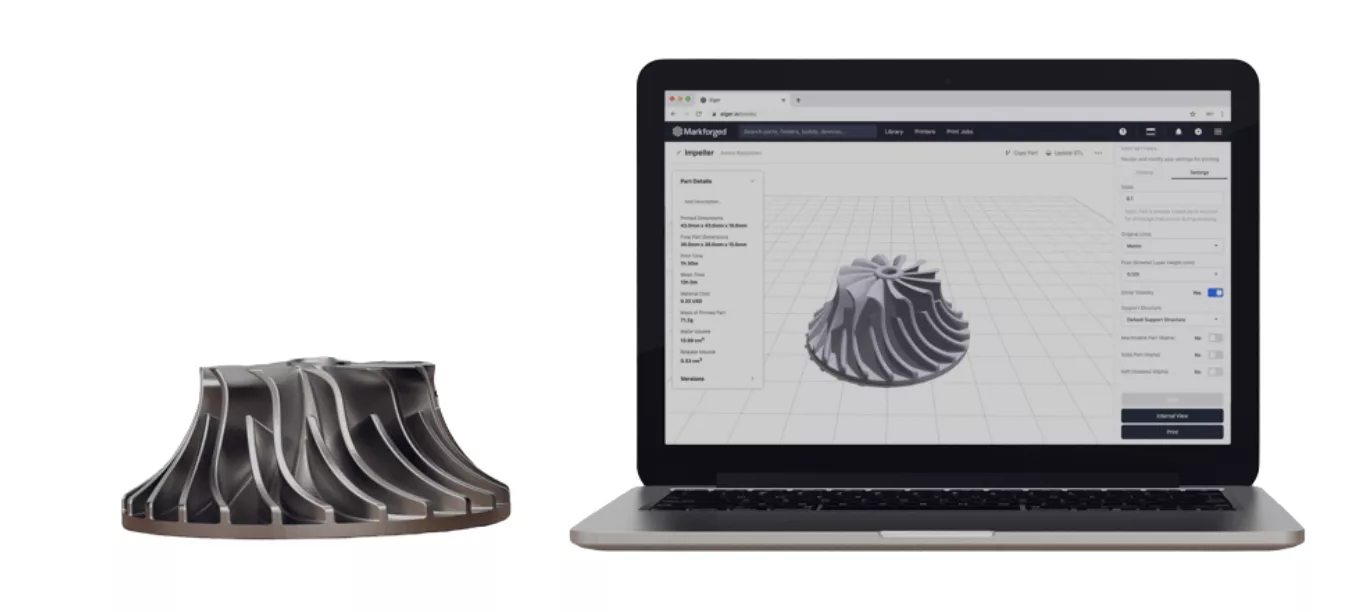
This is why point-of-need manufacturing is changing the game. By utilizing Markforged additive technology, companies are moving bits, not atoms. Instead of shipping a physical piece of steel across the continent, they are sending a secure digital file to a printer located right on the shop floor or inside a mobile maintenance container.
The Problem with “Just-in-Case” Warehousing
Physical inventory can be a massive drain on an organization’s agility. For Maintenance and Operations managers, the hidden costs of traditional warehousing are becoming impossible to ignore:
- Capital Lockdown: Millions of dollars are tied up in “shelf-ware” that could be better spent on site upgrades or safety equipment.
- Physical Degradation: In harsh Canadian climates, even indoor storage isn’t perfect. Humidity, temperature fluctuations, and vibration can cause degradation of gaskets, seals, and specialized components over time.
- The Obsolescence Trap: When equipment is upgraded or decommissioned, the thousands of spare parts that operations have in storage often become worthless, destined for the scrap heap.
Strength That Rivals Metal: The Markforged Advantage
The biggest hurdle to adopting 3D printing in heavy industry has historically been the “strength gap.” Maintenance managers can’t use standard “plastic” parts on a vibratory screen or a high-pressure pump. This is where the Markforged Digital Forge changes the conversation.
Continuous Fiber Reinforcement (CFR)
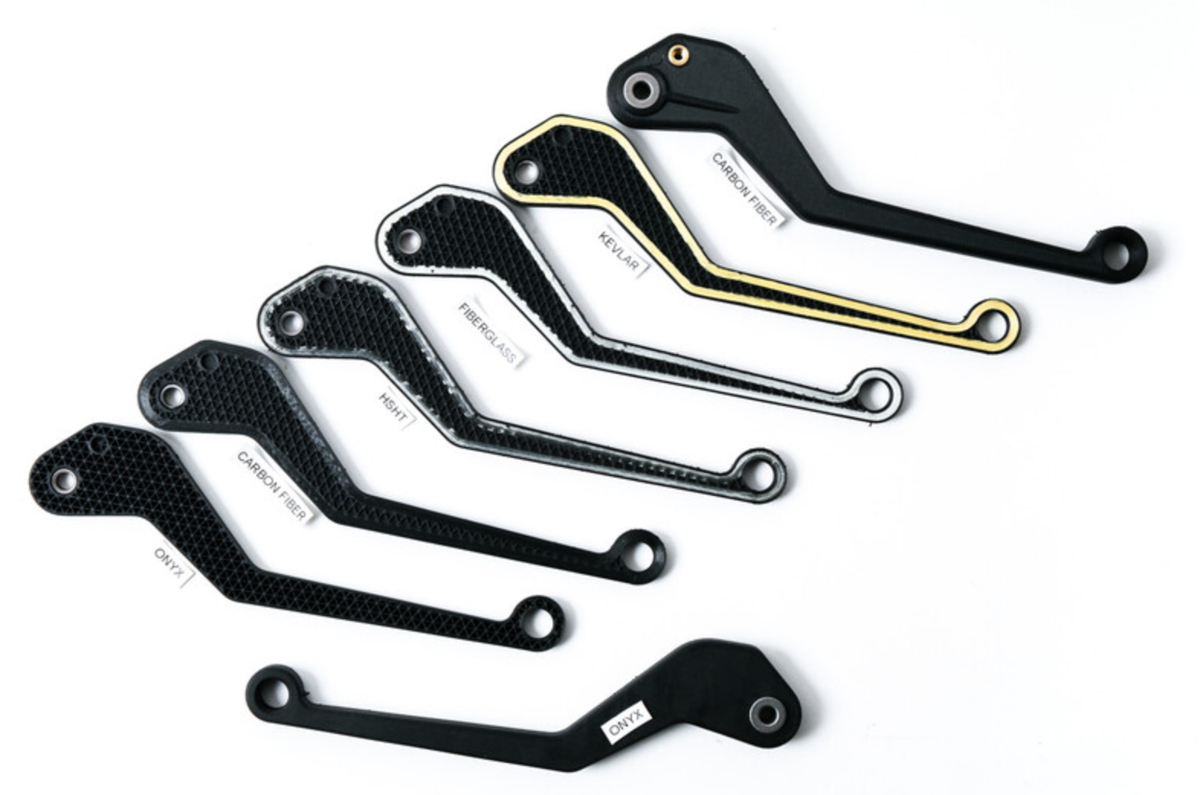
Markforged’s patented technology allows users to transition away from traditional manufacturing by reinforcing parts with continuous strands of Carbon Fiber, Kevlar, or Fiberglass. This isn’t just “strong for 3D printing”, it’s industrial-grade strength.
By inlaying continuous carbon fiber into a base matrix, like Onyx® (a micro-carbon fiber-filled nylon), you can produce components with a strength-to-weight ratio of 6061-T6 aluminum. For an Operations Manager, this means a 3D printed part is no longer a “temporary fix” to get through the shift; it’s a functional, long-term replacement.
The FX20 and the Scale of Production
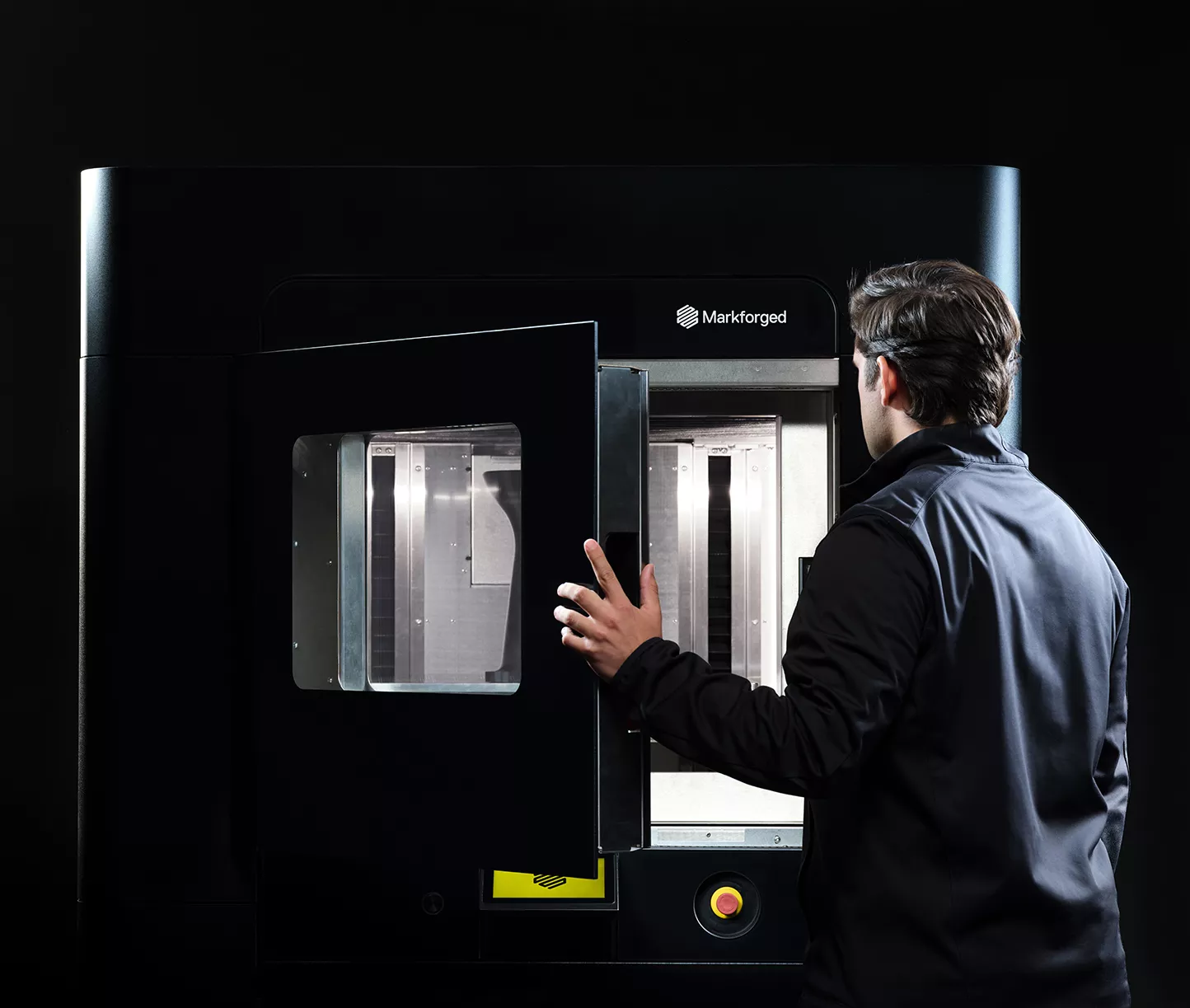
For larger-scale operations, the introduction of the Markforged FX20 has redefined what is possible at the point of need. Capable of printing high-temperature thermoplastics like ULTEM™ 9085, the FX20 allows for the creation of much larger, more resilient parts that can withstand the extreme heat and chemical exposure common in mining and heavy processing.
Resilience Through Remote Site Digital Inventory
The goal of a remote site digital inventory is to create a self-healing supply chain. Imagine a scenario where a specialized sensor mount on a secondary crusher snaps. In the old model, the site foreman would check the local stores, find them empty, and then call the OEM. If the part is in stock, it’s a three-day wait for a bush plane. If it’s not, it’s a three-week wait for a fabrication shop.
In the digital model, the foreman accesses a secure cloud library via Markforged Eiger™. They select the validated part file, which has already been optimized by engineers for maximum strength. They hit “print,” and by the next morning shift, the part is ready to be installed.

Security and Validation
One of the primary concerns for managers is ensuring that a 3D printed part meets safety and performance standards. Through Markforged’s in-process inspection software, the printer uses a laser micrometer to “scan” the part as it prints.
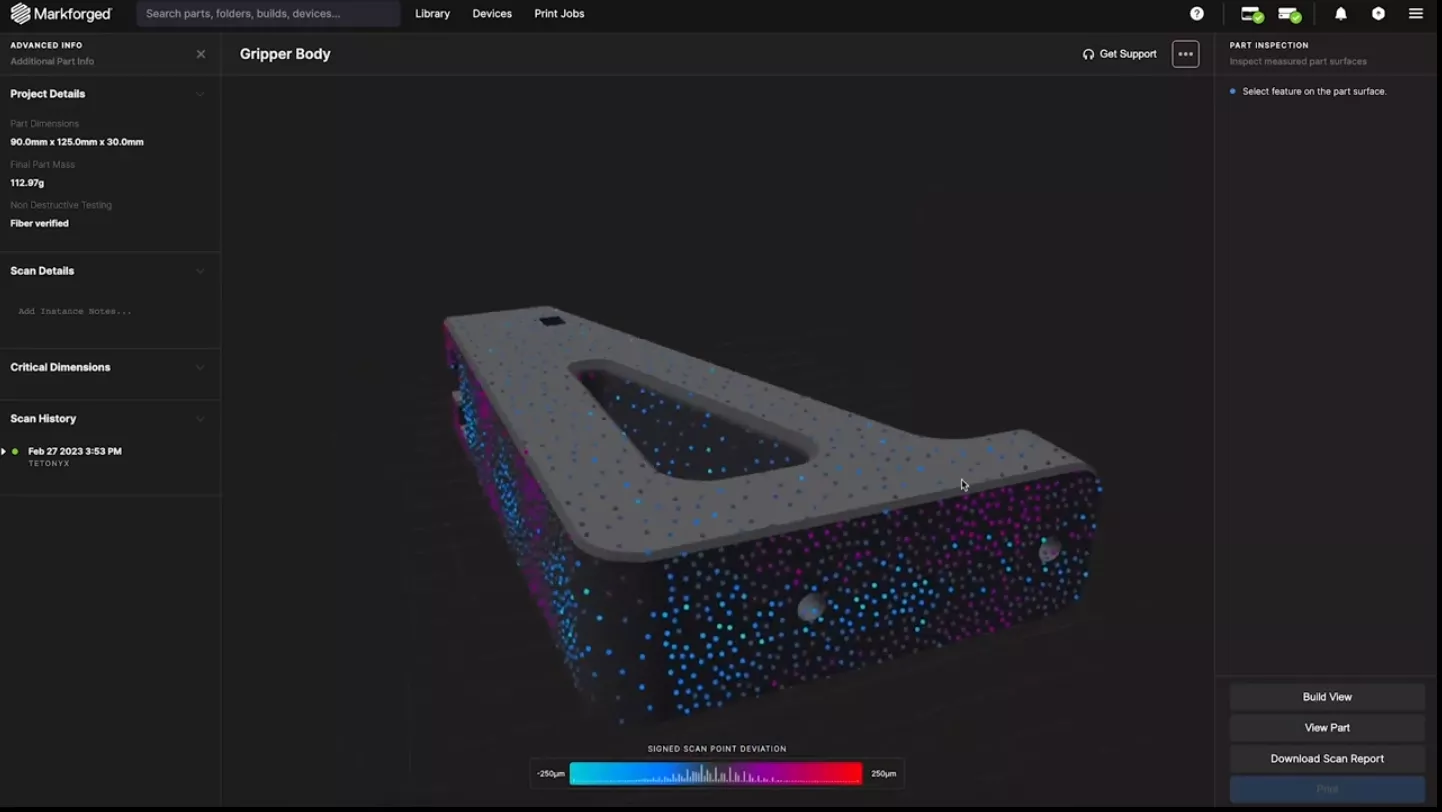
It compares the physical part to the digital twin in real-time, ensuring that the component is dimensionally accurate to within microns. This level of validation is often higher than what you’d get from a traditional third-party machine shop.
Strategic Implementation: How to Build the Digital Warehouse
Moving toward a digital inventory isn’t an “all-or-nothing” transition. It’s a strategic migration that GoEngineer helps partners navigate through a tiered approach:
#1. The Part Audit
We work with maintenance teams to identify the “Bad Actors”, the parts that fail most frequently, have the longest lead times, or cost the most to ship. These are your first candidates for digitization.
#2. Reverse Engineering and Optimization
Many spare parts are for legacy machines, where CAD files no longer exist. Using high-resolution 3D scanning, we can recreate these parts and, in many cases, improve them. If a part always breaks in the same spot, we can reinforce that specific area with carbon fiber in the digital file.
#3. Distributed Manufacturing
Once the digital library is built, it can be deployed across multiple sites. A company with five mines across Ontario and Quebec can have five Markforged printers, all connected to the same secure “Digital Source” library. This ensures that every site is printing the same high-quality validated part every time.
The ROI of Resilience
The return on investment for additive technology in the supply chain isn’t just about the cost of the filament versus the cost of the steel. It’s about the reduction of downtime.
Consider a gold mine where an hour of downtime costs $100,000. If a 3D printed part saves just five hours of waiting for a courier, the printer has paid for itself in a single afternoon. When you factor in the elimination of shipping costs to remote locations and the reduction in warehouse footprint, the financial argument for digital inventory becomes undeniable.
Furthermore, there is the sustainability factor. By printing parts on-site, you eliminate the massive carbon footprint associated with global logistics. You aren’t flying a 5lb piece of metal halfway around the world; you are using only the material you need, exactly where you need it.
Why GoEngineer?
Transitioning to a digital inventory model requires more than just a printer. It requires a partner who understands the intersection of engineering, software, and the harsh realities of Canadian industry.
At GoEngineer, we don’t just sell hardware; we provide the expertise to help you integrate the Digital Forge into your existing maintenance workflows. From training your team on Eiger™ to helping you identify which parts of your inventory are ready for the “digital leap,” we are committed to helping you build a more resilient, self-sufficient operation.
Stop Waiting for the Lead Time
The “weeks-long” wait is a choice, not a necessity. In 2026, the technology exists to make your supply chain as agile as your data. By embracing point-of-need manufacturing, you can protect your uptime, empower your maintenance teams, and ensure that your operation is ready for whatever challenges the Canadian landscape throws your way.
Ready to start digitizing your inventory?
Our team of additive manufacturing experts is ready to help you conduct a part audit and build a roadmap for your digital transformation.
Contact us* today to see how Markforged technology can eliminate your lead time bottlenecks and bring your manufacturing to the point of need.
*Only available in Canada.
About GoEngineer
GoEngineer delivers software, technology, and expertise that enable companies to unlock design innovation and deliver better products faster. With more than 40 years of experience and tens of thousands of customers in high tech, medical, machine design, energy and other industries, GoEngineer provides best-in-class design solutions from SOLIDWORKS CAD, Stratasys 3D printing, Creaform & Artec 3D scanning, CAMWorks, PLM, and more
Get our wide array of technical resources delivered right to your inbox.
Unsubscribe at any time.