fe-safe
The Industry Standard for Multiaxial Fatigue Analysis, Weld Durability, & Elastomer Fatigue Simulation

Stop Over-Engineering. Start Predicting Real-World Life.
In today's competitive market, over-engineering is as costly as failure. For the engineering manager, the goal is clear: minimize warranty exposure and drastically reduce the reliance on expensive, time-consuming physical prototypes. For the analyst, the challenge is technical: standard analysis tools simply cannot accurately model complex loading scenarios, material behaviors, or assembly interactions.
SIMULIA fe-safe bridges this gap. By employing advanced multiaxial algorithms and sophisticated material models, fe-safe allows your team to predict fatigue life with unprecedented accuracy. The result? You can validate designs virtually, catch failures before metal is cut, and minimize warranty exposure to deliver more profitable products to market faster.
Why fe-safe for Fatigue Life Prediction?

Accuracy
Move beyond simple stress-based fatigue analysis. With fe-safe, predict failure under complex, real-world loading scenarios where traditional fatigue calculations fail.

Speed
User-friendly setup and parallel processing ensure fast turnaround times, enabling rapid design iteration.

Optimization
Don't just analyze, improve. Seamless integration with Tosca allows you to automatically optimize component design to meet strict durability targets.
Features
- Multiaxial Fatique
- Verity for Welds
- fe-safe/Rubber
- Signal Processing
Multiaxial Fatigue
Master Complex Loading with Critical Plane Analysis
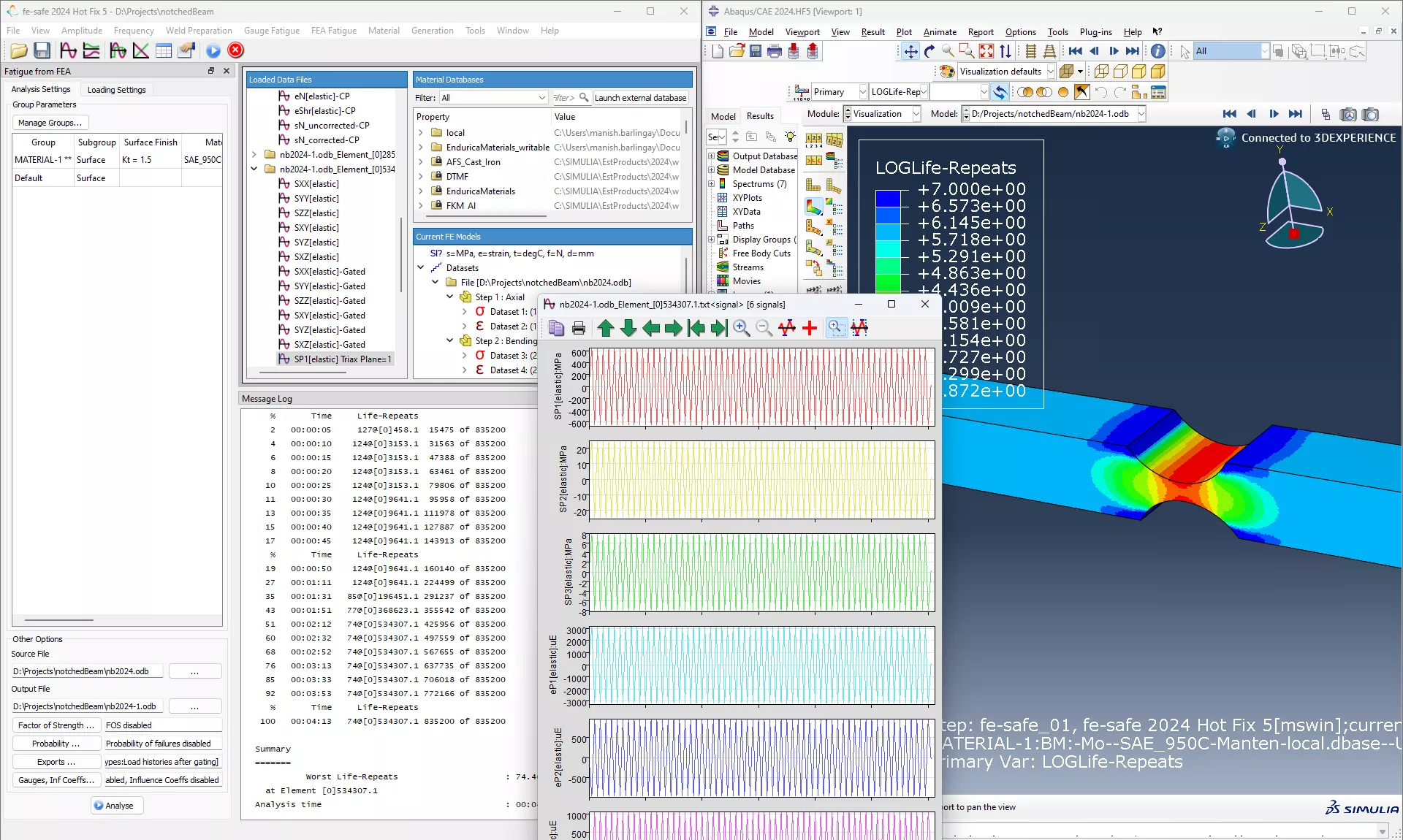
fe-safe employs advanced multiaxial critical plane analysis to virtually scan your component's surface, identifying the specific plane where cracks will initiate. Whether your part faces non-proportional loading, phase shifts, or complex variable amplitudes, fe-safe’s algorithms accurately predict failure.
Key Capabilities:
- Automatic Hot-Spot Detection: Instantly identifies critical nodes across the entire model.
- Material-Specific Algorithms: Automatically selects the best algorithm based on your material classification.
- Speed & Accuracy: Parallel processing delivers high-fidelity contour plots of fatigue life without sacrificing solution speed.
Verity for Welds
The Verity® Method: Mesh-Insensitive Weld Accuracy
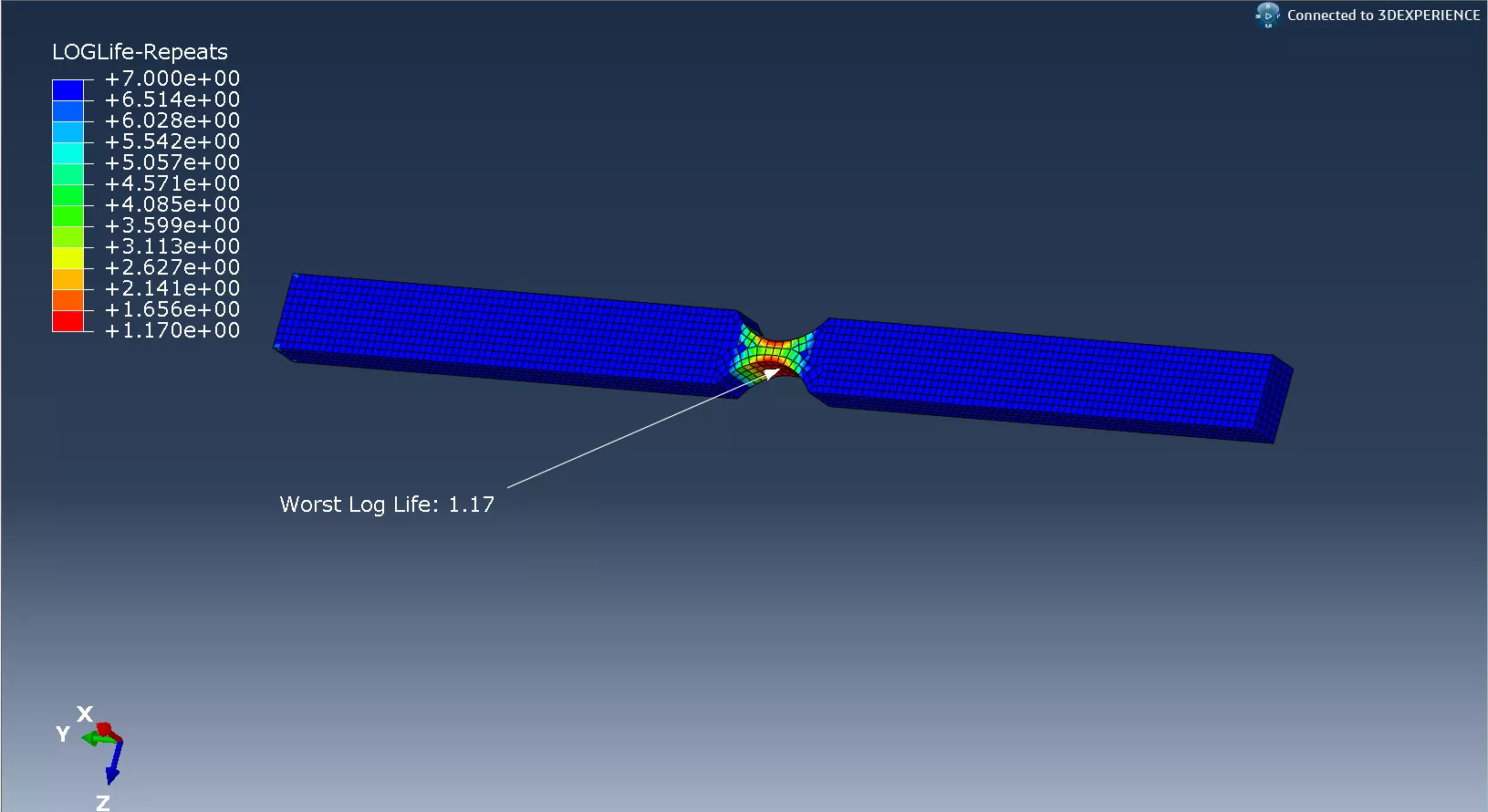
Eliminate the subjectivity and mesh-dependency of traditional weld fatigue analysis. The Verity® Module in fe-safe utilizes the patented Battelle Structural Stress Method, validated against over 3,500 physical tests. Instead of relying on unstable peak stresses at the weld toe, Verity calculates an equivalent structural stress using nodal forces. This mesh insensitive method allows you to achieve consistent, validated life predictions.
Key Capabilities:
- Mesh Insensitivity: Get accurate results without refining your mesh or "tuning" elements at the weld toe.
- Master S-N Curve: Replaces hundreds of empirical curves with a single, unified Master S-N curve for all weld geometries.
- Versatility: Works seamlessly on structural welds, seam welds, and spot welds.
fe-safe/Rubber
The Gold Standard for Elastomer Durability
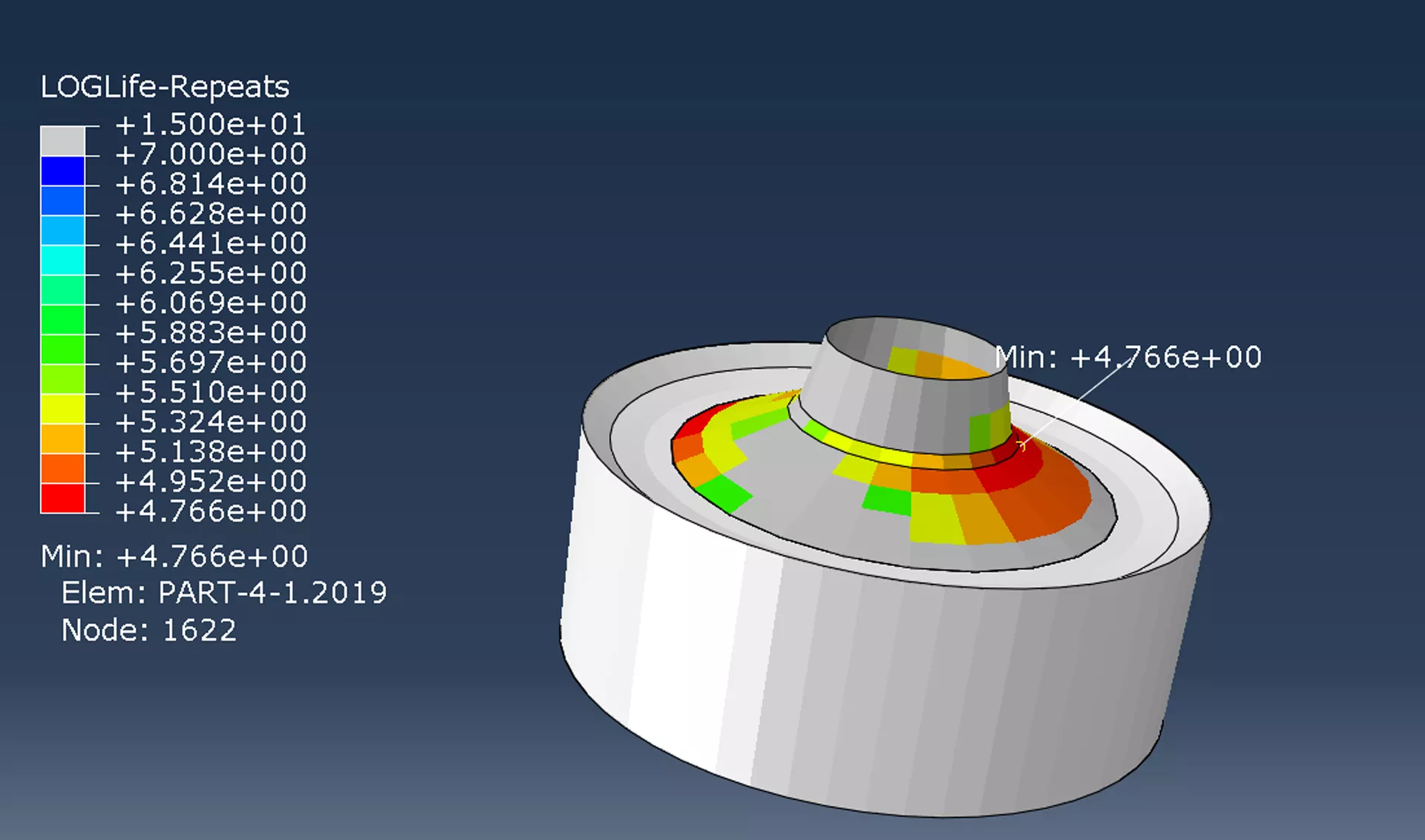
Rubber does not behave like metal, and your simulation software shouldn't treat it that way. Developed in partnership with Endurica, the global leader in elastomer durability, fe-safe/Rubber accurately accounts for complex material behavior, including the Mullins effect (stress softening), ozone attack, and strain crystallization, ensuring your mounts, seals, and tires survive the real world.
Key Capabilities:
- Patented critical plane algorithm: Accurately models complex physics like finite straining, energy release rate for hypothetical defects, and crack closure for each plane as a function of time.
- Rainflow counting: Accounts for variable amplitude loading and tracks damage accumulation of each duty cycle event on a per-plane basis.
- Material database: A selection of accurate nonlinear elastomeric material models with complex behaviors like Mullins effect, strain crystallization, ozone attack, time & temperature dependence, and more.
Signal Processing
Turn Noisy Data into Actionable Durability Insights
Great simulation requires great input data. Included as a standard feature, safe4fatigue is a comprehensive suite of signal processing tools designed to clean, filter, and analyze your loading histories. Through amplitude analysis, frequency analysis, and digital filtering, it makes durability test programs faster and more realistic. It also enables durability analysis using measured or simulated strain signals.
Key Capabilities:
- Test Acceleration: Optimize durability test programs to make them faster and more realistic.
- Advanced Filtering: Remove high-frequency noise and spikes from physical sensors to prevent skewed simulation results.
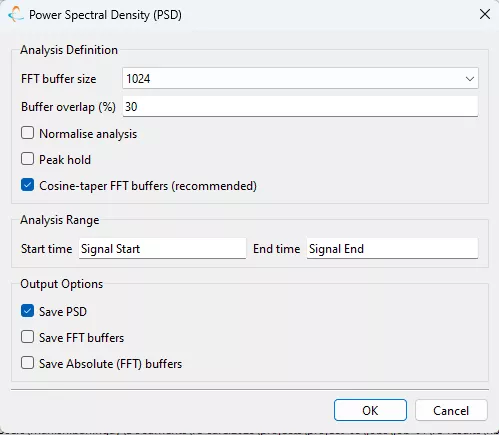
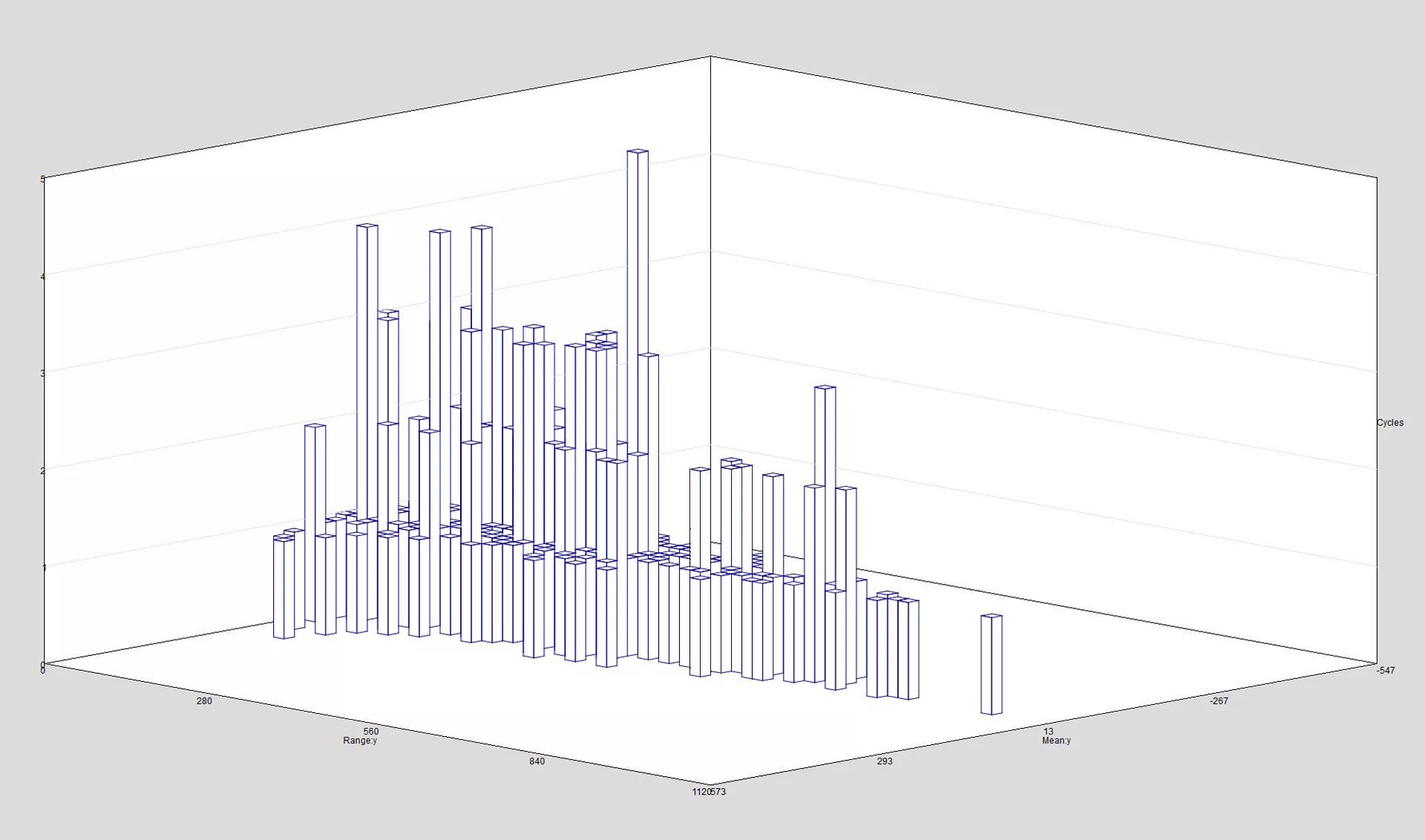
- Frequency Domain Analysis: Convert time-domain signals into Power Spectral Densities (PSDs) for vibration fatigue analysis.
WHITEPAPER
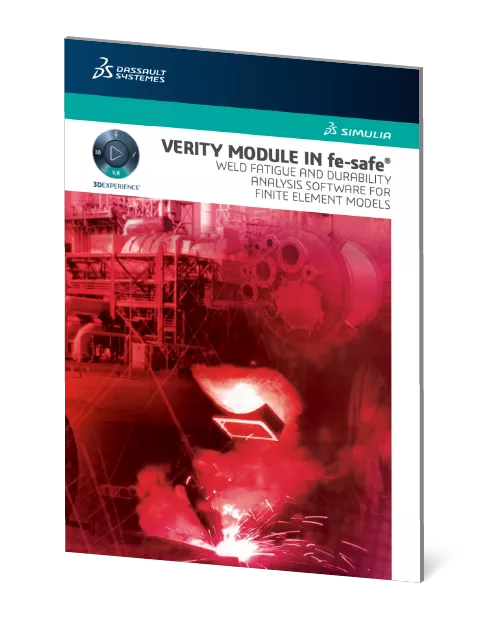
Verity Module in fe-safe
Predicting fatigue life in welded structures is notoriously complex. Traditional FEA methods are plagued by the "singularity problem," where refining the mesh causes stress values to skyrocket, forcing engineers to rely on subjective "tuning" or expensive physical prototypes to validate designs.
This whitepaper introduces the Verity® Module in fe-safe, the only commercially available tool using the patented Battelle Structural Stress Method. Instead of extrapolating volatile surface stresses, Verity calculates structural stress using nodal forces, which are stable and independent of mesh density.
Dowload this brochure to discover:
- The "Master S-N Curve": How Verity collapses data from structural, seam, and spot welds into a single, unified curve eliminating the need for users to choose from hundreds of empirical standards.
- Massive Validation: Review the methodology validated against a database of over 3,500 physical fatigue tests.
- Ford Motor Company Case Study: See the data where Verity predicted crack initiation at 0.81 repeats against a physical test result of 0.83 repeats, a level of correlation that allows for "Right-First-Time" design.
- Six Sigma Consistency: Learn how achieving results independent of mesh size and element type provides the consistency required to realize Six Sigma in CAE applications.
fe-safe Portfolio
-
fe-safe
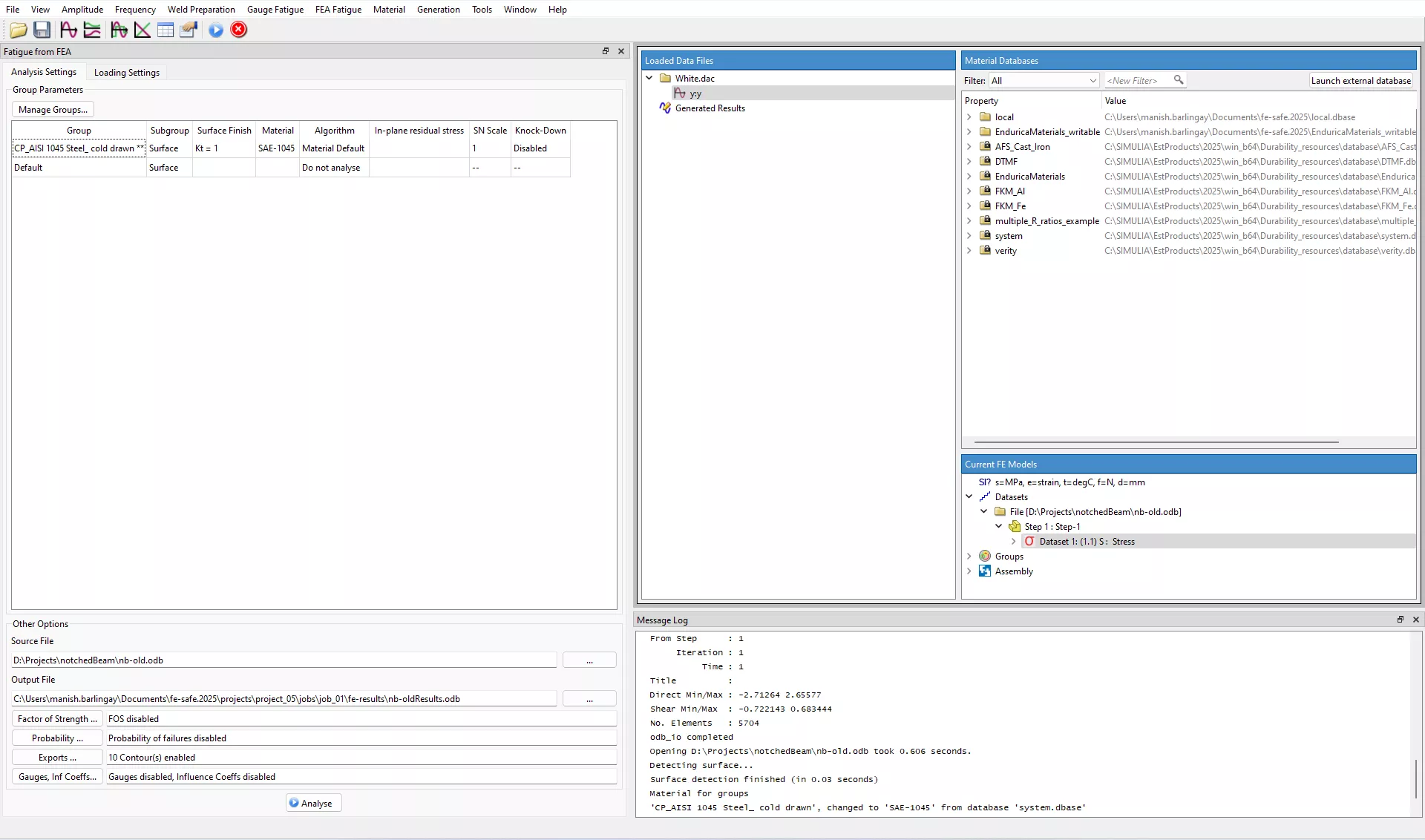
- Traditional FEA tells you where stresses are high; fe-safe tells you if, when, and where your part will fail. Built on advanced Multiaxial Critical Plane technology, the core fe-safe solver is designed to handle the complex, non-proportional loading realities of modern engineering.
Whether you are analyzing engine blocks, landing gear, or medical devices, fe-safe automatically detects fatigue hot spots, selects the most appropriate algorithm, and delivers accurate life contours directly back to your FEA viewer. - Key Capabilities:
- Multiaxial Critical Plane Analysis: Accurately predicts failure under complex loading.
- Automatic Algorithm Selection: Intelligently selects fatigue algorithm based on material classification (ductile or brittle).
- Manufacturing Effects: Accounts for residual stresses, surface finish, and material variability to match the "as-manufactured" reality.
- High-Performance Computing: Parallel processing architecture ensures rapid turnover even for massive full-vehicle models. -
-
fe-safe/Rubber
- Rubber is not metal, and simulating it requires specialized physics. Developed in partnership with Endurica, the global leader in elastomer durability, fe-safe/Rubber is the only commercial software that applies Critical Plane Analysis to finite strain (large deformation) conditions.
It accounts for the unique, non-linear behaviors of polymers, ensuring your mounts, seals, and tires survive real-world service. - Key Capabilities:
- Complex Material Modeling: Accurately simulates the Mullins effect (stress softening), ozone attack, and strain crystallization.
- Finite Strain Support: Critical plane algorithm specifically developed for finite straining accurately predicts fatigue life.
- Rainflow Counting: Accounts for variable amplitude loading and tracks damage accumulation of each duty cycle event on a per-plane basis.
- Endurica Validation: Leverages the industry's most rigorously validated elastomer fatigue solver. -
-
safe4Fatigue
- Fatigue analysis is only as good as your input data. safe4Fatigue, included in fe-safe, is an integrated system for durability analyses from measured or simulated strain signals and comprehensive signal processing.
It features powerful tools for amplitude analysis, frequency analysis and digital filtering. Use it to analyze long duty cycles, identify non-damaging events, and generate accelerated test signals that reduce shaker table time without compromising validation accuracy. - Key Capabilities:
- Advanced Filtering: Remove high-frequency noise, spikes, and drift from physical test data to prevent skewed simulation results.
- Test Acceleration: Compress weeks of road load data into hours of physical testing by removing non-damaging cycles.
- Frequency Domain Analysis: Convert time-domain signals into Power Spectral Densities (PSDs) for vibration fatigue.
- Load Interaction: Superimpose multiple load histories to simulate complex, multi-channel service environments. -
-
Verity® Module for fe-safe
- Stop "tuning" your mesh to match test results. The Verity® Module employs the patented Battelle Structural Stress Method, a revolutionary approach that eliminates the mesh-sensitivity problems inherent in traditional weld fatigue analysis.
By calculating structural stress from nodal forces rather than surface stresses, Verity delivers consistent, accurate life predictions regardless of mesh density. - Key Capabilities:
- Mesh Insensitivity: Achieve accurate results with coarse meshes, eliminating the need for high-density sub-modeling at weld toes.
- The Master S-N Curve: Collapses data from thousands of weld tests into a single, unified curve, removing the need to pick from hundreds of empirical S-N lines.
- Broad Application: Validated for structural welds, seam welds, and spot welds.
- Total Integration: Analyze welded and non-welded parts in a single run, with results plotted on the same contour map. -
Frequently Asked Questions
Technical Capabilities & Physics
Traditional methods are highly sensitive to mesh size; if you refine your mesh at the weld toe, the stress singularity causes the predicted life to plummet, forcing you to "tune" the mesh to match tests. Verity (the Battelle Structural Stress Method) is mesh-insensitive. It calculates structural stress based on nodal forces rather than surface stresses, allowing you to get accurate, consistent life predictions even with coarse meshes, eliminating user subjectivity.
Yes. Unlike codes that try to force fit metal fatigue theories onto rubber, fe-safe/Rubber leverages the proprietary technology of Endurica. It accounts for unique elastomeric behaviors such as finite strains (large stretching), the Mullins effect (stress softening), and strain crystallization, providing the only commercially available critical plane solution for rubber.
fe-safe supports both. Stress life (S-N) is typically used for high-cycle fatigue (HCF) where loads are low and deformation is elastic. Strain life (e-N) is used for low-cycle fatigue (LCF) where local plastic deformation occurs at stress concentrations.
Integration & Workflow
No. While fe-safe has the deepest integration with Abaqus (reading ODB files directly), it is solver-neutral. It accepts results from ANSYS (.rst), MSC Nastran (.op2), and other major solvers.
Yes, through its integration with SIMULIA Tosca, you can run a shape optimization that will reshape component surfaces, reducing local stresses and increasing durability until the target is achieved (as long as your prescribed constraints allow it).
Through rainflow counting and the critical plane method. Complexity in loading conditions mainly arises due to 1. variable amplitude loading and 2. non-proportionality between the direct and shear stresses. Rainflow counting handles variable amplitude loading, while critical plane analysis handles non-proportionality.
Rainflow counting is an industry standard method to accurately calculate fatigue cycles in a variable amplitude signal. Critical plane analysis resolves the strains onto a number of planes, calculates the damage on each plane, and reports the damage on the worst plane as the fatigue life.
Advanced Capabilities & Physics
Yes. fe-safe includes advanced frequency-domain methods to handle random vibration fatigue. Unlike simple tools that struggle with random inputs, fe-safe can use PSD data directly and combine it with critical plane analysis. This allows for accurate life prediction of components subjected to stochastic loading, such as vehicle suspension systems on rough roads or aerospace components under aerodynamic buffeting.
Yes. The recently introduced D TMF technology can be used for localized or widespread plasticity and creep. It models the effects of temperature on fatigue properties, such as: the impact of the phasing between the temperature and stress/strain history; creep and its interaction with fatigue; and oxidation and its interaction with fatigue.
Licensing & Purchasing
fe-safe is part of the SIMULIA Unified Licensing system (often referred to as "Extended Packaging"). It runs using the same Tokens that power Abaqus, Isight, and Tosca.
- For Managers: If you already have a pool of SIMULIA tokens for Abaqus, your team may already have access to fe-safe without a separate purchase.
- For Analysts: This allows you to scale up parallel processing (using more cores) during peak project times by drawing from the shared token pool.
fe-safe is highly parallelized. Because it performs calculations at every node of the model, performance scales well with multi-core CPUs. We recommend a workstation with a high core count and fast RAM.
Yes. We offer specialized training courses ranging from "Introduction to fe-safe" to advanced topics like "Weld Fatigue with Verity" and "Elastomer Fatigue." Our Application Engineers can also help you benchmark the software against your current physical test data.
Business & Process Value
Absolutely. fe-safe allows you to generate a "warranty curve" (probability of survival). By inputting the statistical variability of your material properties and the variability of customer usage profiles, the software predicts the percentage of parts expected to fail at specific service intervals. This gives engineering managers a direct link between simulation data and financial risk.
fe-safe is designed for enterprise-scale simulation. It utilizes multi-threaded parallel processing to analyze models with millions of nodes efficiently. Additionally, it employs intelligent nodal elimination algorithms to automatically skip non-damaging areas, focusing computational power only on "hot spots" to drastically reduce runtime without sacrificing accuracy.
Yes. fe-safe is fully compatible with SIMULIA Isight. You can create a "closed-loop" optimization workflow where Isight modifies parameters (like geometry or thickness), automatically updates the FEA, runs the fe-safe fatigue calculation, and iterates until the target design life is achieved. This removes manual bottlenecks and ensures optimal component sizing.
Yes. For organizations with legacy data or specialized internal methods, fe-safe supports user-defined algorithms. You can script your own failure criteria to run within the fe-safe interface, allowing you to leverage the software's powerful pre- and post-processing while maintaining your proprietary intellectual property.
Additional Resources
Take Advantage of GoEngineer’s Extensive Knowledge Base and Resources

Find a Solution
Our robust Knowledge Base contains over 12,000 resources to help answer your product design questions. From basic CAD questions to in-depth guides and tutorials, find your solution here. Find a Solution

PROFESSIONAL TRAINING
Improve your skills with professional training and certifications in SOLIDWORKS, CAM, 3D Printing, and 3D Scanning offered four ways: self-paced, online, on-site, or in-classroom. Certified Training Courses

BLOG
#1 Technical Resource Worldwide - Right at your fingertips. Search or browse through hundreds of SOLIDWORKS tips & tricks, additive manufacturing product developments, announcements, how-to guides, and tutorials. Blog

YouTube Channel
Our YouTube channel hosts hundreds of educational tutorials, product demonstrations, recorded webinars, and best practices for all of our products and services. GoEngineer's YouTube Channel
ONLINE STORE
Order 3D printing materials and consumables, enroll in SOLIDWORKS training classes, and buy official GoEngineer gear directly from our online store. Online Store
WEBINARS
Our engineering webinars are hosted by some of the top experts in the industry. They are always recorded, always free, and always offer a live Q&A. WEBINARS
3D Printing Services
Need to 3D print a part? Our Additive Manufacturing experts will 3D print your part and deliver it to you using the latest technology on one of our professional FDM, PolyJet and SL 3D printers. 3D Printing Services