Silicon Independence: Why Your EDA Choice is a Supply Chain Strategy

In recent years, due to global supply chain disruptions, the way our customers talk about electronic design has shifted. It’s no longer just about making the circuit work; it’s about making sure the circuit can be built.
For years, the industry operated under the assumption that if you design a great product, the components will be there to build it. We now know that it is a gamble. The most brilliant board layout in the world isn’t worth much if your primary MCU has a 52-week lead time and your design software has locked you into a “golden path” that makes pivoting difficult.
The Trap of the Golden Path
It sounds great at first. A chip manufacturer partners with an EDA vendor to provide out-of-the-box reference designs and pre-built libraries. It looks like a shortcut to market.
But we've seen this become a gilded cage. When you design within a vendor-locked ecosystem, especially one owned by a chip manufacturer, your IP is tied to their roadmap. If they hit a fabrication snag or their prices spike, you're stuck. The cost of switching chips isn’t just the price of the new silicon; it’s a total redesign, new signal integrity risks, and months of lost time.
Silicon Independence: Designing Without Borders
True silicon independence means your EDA environment is agnostic. Instead of favoring one manufacturer, Cadence serves as the industry’s neutral foundation.
There is a reason why the top 10 semiconductor companies in the world rely on Cadence. They use it to design the very chips you’re putting on your boards. By using that same platform, you gain a level of data integrity that the “shortcut” tools can’t match. Cadence doesn’t care whose chip you use; it treats your design intent as the priority, allowing you to build a resilient IP library that you can port across manufacturers, especially during unpredictable supply chain situations.
Solving Problems Earlier
We’ve all been there - days away from a deadline when you realize a critical part is EOL, or a high-speed trace is creating a nightmare for signal integrity.
This is where the concept of “shifting left” comes in. Instead of finding these issues late in the process (or worse, during a failed prototype run), you move that realization to the start of the design.
By using In-Design Analysis and Live BOM within OrCAD X and Allegro X, you’re validating the supply chain and the physics in real time. If a part looks risky, you pivot then, not three months later when it’s 10x more expensive to fix.
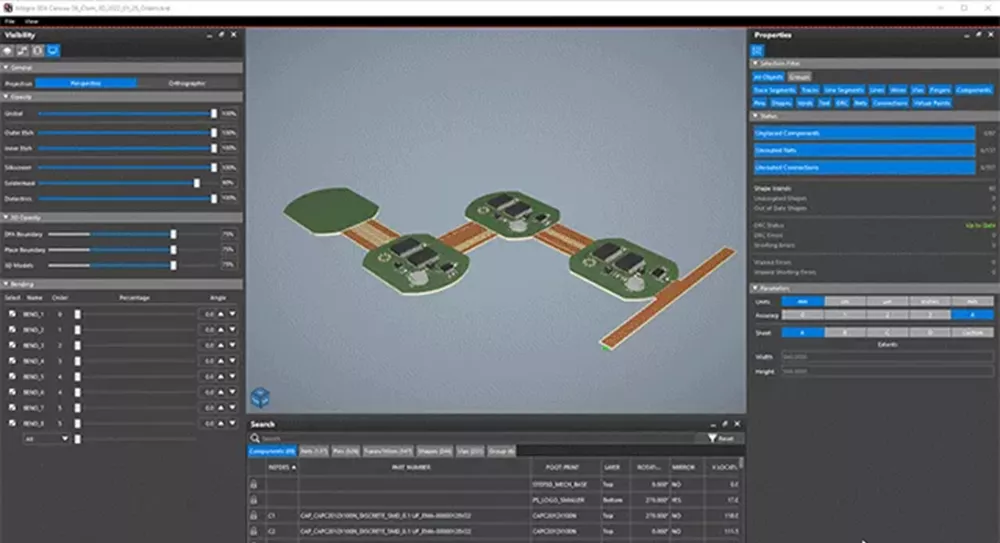
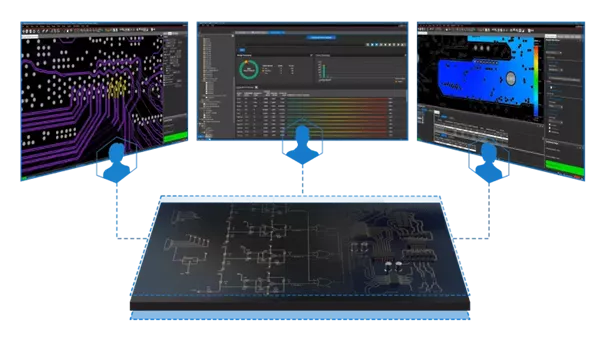
Allegro X contains numerous integrated tools on one platform
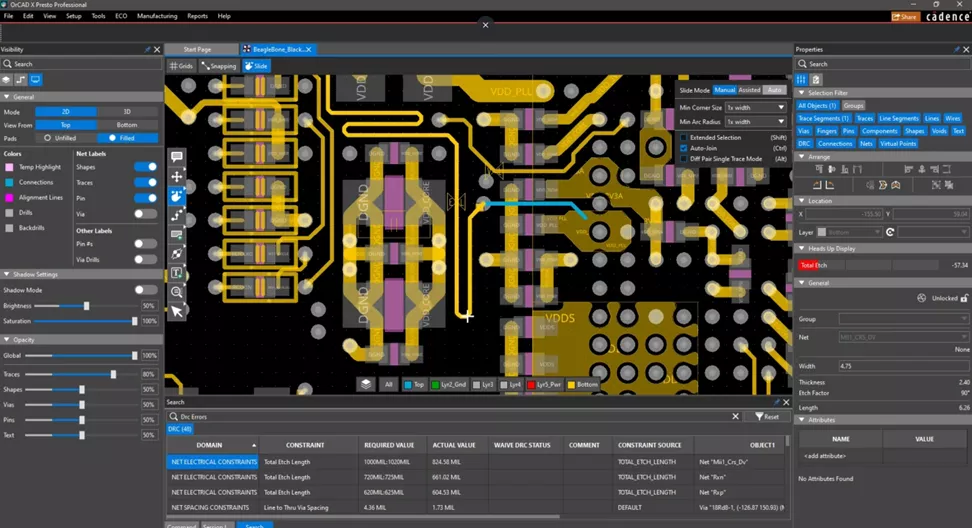
OrCAD X provides powerful PCB design tools to unlock your design potential
Supply Chain Agility as a Competitive Advantage
In a volatile market, the ability to pivot your Bill of Materials (BOM) is your greatest competitive advantage. This is where the distinction between drawing a board and managing a design becomes clear. When a critical component goes end-of-life or becomes unavailable, a silicon-independent strategy allows you to:
- Swap with Confidence: Use advanced constraint management to ensure a replacement part meets the same physical and electrical requirements without a full manual re-route.
- Simulate Before You Solder: Integrated signal integrity (SI) and power integrity (PI) tools allow you to virtually validate a secondary component choice before committing to a prototype run.
- Maintain Digital Intent: Keep your logic and high-speed constraints intact even when the physical footprint changes.
Growing Without the Growing Pains
A common question we get is whether a team needs “this much power” early on. The reality is that mid-market companies and startups often face higher stakes than the giants. A massive corporation can weather a six-month delay; a 20-person firm often can’t.
OrCAD X is positioned to bridge that gap. It gives you the “big-iron” engine used by Tier 1 aerospace firms, but in a package that is accessible, intuitive, and designed for the agile engineer. You aren’t buying “too much tool”; you’re ensuring that as your designs get more complex, your software doesn’t become the bottleneck.
At GoEngineer, we’ve spent decades helping companies optimize their design-to-manufacturing workflows. We know that the wrong EDA choice can bottleneck a company’s growth.
When you choose Cadence through GoEngineer, you’re gaining a partner that understands the whole picture – from thermal management and high-speed routing to how that board is going to fit inside its mechanical housing in SOLIDWORKS.
- Independent, so you aren't at the mercy of one vendor's schedule.
- Integrated, so ECAD and MCAD teams actually speak the same language.
- Scalable, so your tools grow as your designs get more complex.
Your choice of EDA software is now a primary pillar of your risk management strategy. By choosing an agnostic, industry-standard platform like Cadence, you're ensuring your IP remains flexible and portable.
Ready to de-risk your design process?
Whether you’re looking to migrate from a legacy system or want to see how the latest OrCAD X features can streamline your BOM, our team is ready to help.

About GoEngineer
GoEngineer delivers software, technology, and expertise that enable companies to unlock design innovation and deliver better products faster. With more than 40 years of experience and tens of thousands of customers in high tech, medical, machine design, energy and other industries, GoEngineer provides best-in-class design solutions from SOLIDWORKS CAD, Stratasys 3D printing, Creaform & Artec 3D scanning, CAMWorks, PLM, and more
Get our wide array of technical resources delivered right to your inbox.
Unsubscribe at any time.