Aluminum vs. CFR: It's Time to Stop Machining Your Jigs and Fixtures

For decades, the machine shop has been the heartbeat of the manufacturing floor. When a new line starts or a part design changes, the first call is to the CNC department to mill out a set of 6061-T6 aluminum jigs and fixtures. It’s a tried-and-true process, but these days, tried-and-true is quickly becoming slow and expensive.
As manufacturing moves toward high-mix, low-volume production and more agile supply chains, the traditional reliance on machined aluminum is hitting a wall. Between rising material costs, skilled labor shortages, and long lead times, the bottleneck is clear.
Enter Continuous Fiber Reinforcement (CFR), an industrial-grade process pioneered by Markforged that lets you print parts with the strength of metal.
Can Plastic Really Replace Aluminum?
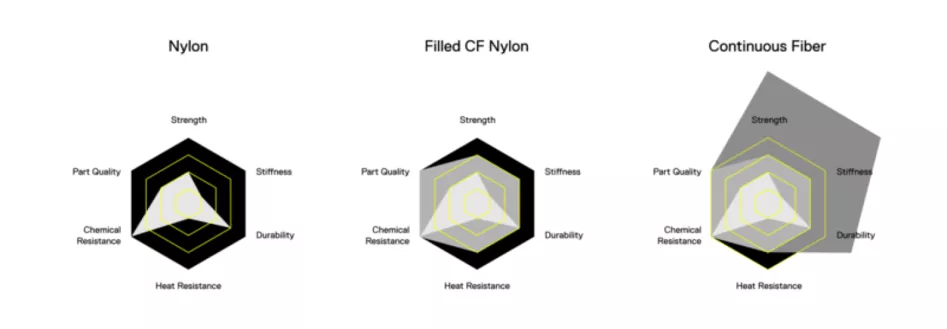
The biggest hurdle for most engineers is the stigma around plastic. Standard FFF (Fused Filament Fabrication) parts are great for prototyping, but they lack the structural integrity for the rigors of a CNC mill or an assembly line.
Markforged changed this equation with CFR technology. The process starts with a base matrix, usually Onyx, a micro-carbon fiber-filled nylon. While Onyx alone is impressive, the magic happens when a secondary nozzle lays down continuous strands of high-strength fiber (e.g., Carbon Fiber, Fiberglass, or Kevlar®) into the part.
How the properties stack up:
- Tensile Strength: Continuous Carbon Fiber has a flexural strength of 540 MPa, surpassing the 330 MPa typically found in 6061-T6 aluminum.
- Stiffness: Carbon fiber’s elastic modulus is nearly equivalent to aluminum (~60 GPa vs. 69 GPa), providing the rigidity required for high-precision fixtures.
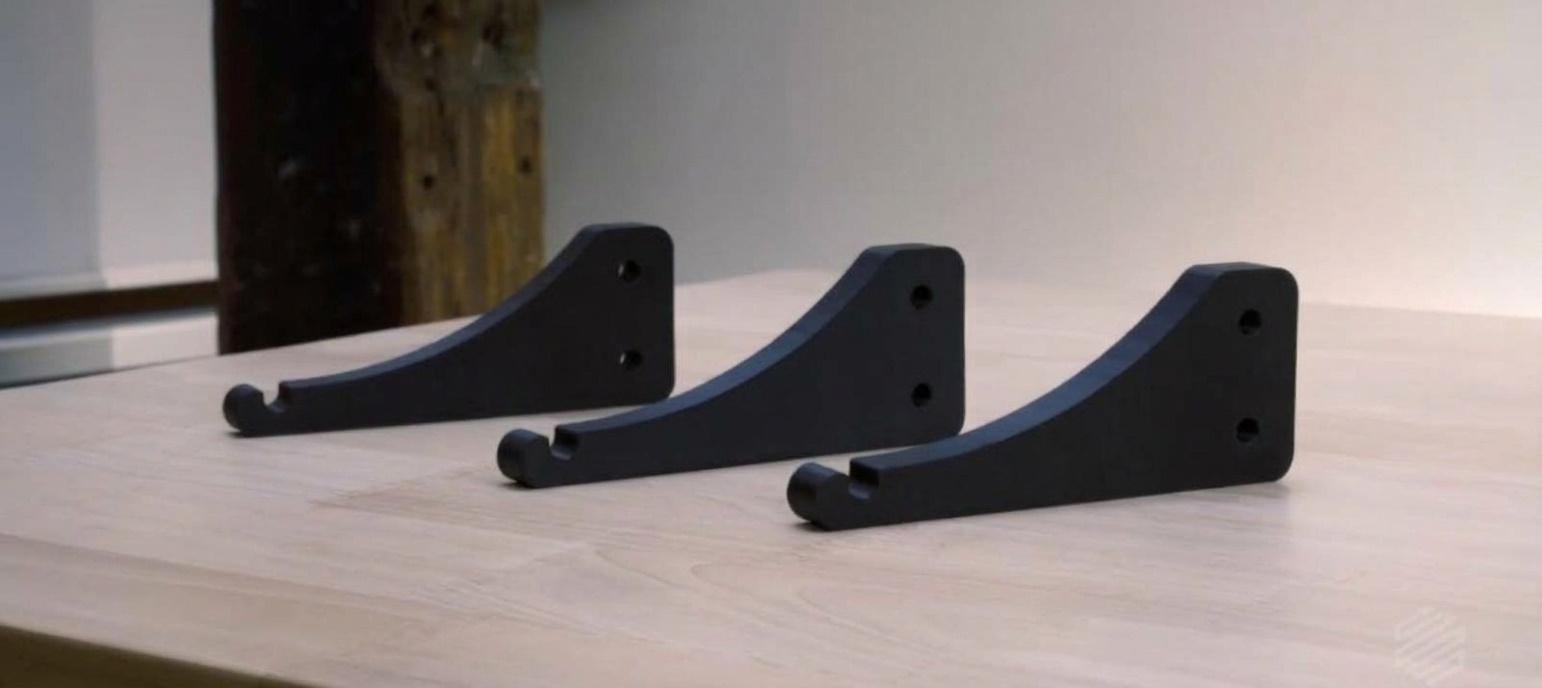
- Weight: CFR parts are up to 40% lighter than aluminum for equivalent strength. Operator ergonomics and robot end-of-arm tooling (EOAT) speeds are critical, so shedding weight is a massive competitive advantage.
Next-Generation CFR
Flame Retardance and High-Temperature Environments
Industrial operations often require specialized materials that are capable of withstanding regulated aerospace floors, high-voltage environments, and extreme thermal conditions. Markforged's range of advanced continuous fiber materials is specifically designed to meet these demanding requirements.
Carbon Fiber FR (Flame-Retardant)
Carbon Fiber FR matches the extreme stiffness and ultra-high-strength profile of standard carbon fiber (boasting a matching 540 MPa flexural strength) but features specialized flame-retardant chemistry. When paired with an Onyx FR base matrix, this combination offers lot-level material traceability and passes the strict flame, smoke, and toxicity (FST) test suites required for aerospace compliance.
- Hardware Support: Carbon Fiber FR is broadly accessible across the Markforged industrial lineup and is fully supported on the X7, FX10, and FX20 platforms.
Carbon Fiber HT-A (High-Temperature/Aerospace)
Carbon Fiber HT-A is an enhanced, traceable, FST-compliant continuous fiber engineered specially to reinforce advanced, high-temperature thermoplastics like Vega™ and ULTEM™ 9085 Filament. Developed for rigid system and material qualification workflows, HT-A features a refined manufacturing process that minimizes property variability and maximizes repeatability for the most critical flight-ready or factory-floor components.
- Hardware Support: Because of the extreme thermal management required to process high-temperature polymers, Carbon Fiber HT-A is exclusively supported on the flagship FX20 production platform.
Why 2026 Is the Turning Point
While 3D printing has been around for years, several factors have converged to make 2026 the year that CFR officially moves from experimental to essential.

#1. The Cost of Subtractive Waste
Machining is inherently wasteful. To create a 1lb aluminum fixture, you often start with a 5lb block of stock, milling away 80% of the material into chips. With Markforged’s additive process, material utilization exceeds 90%. You only pay for the material that ends up in the part.

#2. Reclaiming CNC Bandwidth
Every hour a CNC machine spends milling a simple drill jig or soft jaw is an hour it isn’t producing high-value, billable customer parts. By offloading tooling to a Markforged industrial series printer, you free up your most expensive equipment for revenue-generating work.

#3. Lead Time Collapse
In 2026, speed matters.
- Traditional: Design > Quote > Order Material > Program CAM > Machine > Deburr > Inspect. Total: 2-4 weeks.
- Markforged CFR: Design > Slice (Eiger) > Printer Overnight > Inspect. Total: 24 hours.
Real-World Impact
Jigs, Fixtures, and Soft Jaws
What does this look like on the floor? Here are the three most common areas where GoEngineer customers are seeing immediate ROI:
Soft Jaws
Machining soft jaws for complex part geometries is time-consuming and consumes valuable CNC bandwidth. With CFR, you can print conformal soft jaws that precisely match your part profile directly from CAD — no CAM programming, no setup time. Reinforcing the clamping layers with Continuous Carbon Fiber gives you a tool rigid enough for moderate vise clamping forces while remaining compliant enough to protect finished or sensitive workpiece surfaces from marring.
Inspection Fixtures
CMM and gauging fixtures require high dimensional stability. The low coefficient of thermal expansion in Markforged Carbon Fiber compared to Aluminium 6061-T6 ensures that your fixtures stay true, even in fluctuating shop environments.
Assembly Jigs
Lightweighting assembly tools directly impacts worker fatigue. A 5lb aluminum tool used 200 times a shift is a recipe for repetitive strain injuries. Replacing it with a 1.5lb CFR equivalent improves safety and throughput simultaneously.
The GoEngineer Perspective
Making the Switch
At GoEngineer, we help you optimize your entire workflow. Transitioning from machined aluminum to CFR isn’t just about buying a printer; it’s about rethinking Design for Additive Manufacturing (DfAM). With tools like Markforged Simulation, you can virtually “stress test’ your jigs before you even hit print, ensuring that the fiber routing is optimized for the specific loads your tool will face.
The data is clear. If you are still machining every fixture from aluminum, you are overpaying in both time and money. The strength gap has closed, the software has matured, and the ROI is too significant to ignore. Is your shop ready to stop milling and start printing? Let’s look at your current tooling catalog and find the low-hanging fruit where CFR can save you thousands this quarter.
About GoEngineer
GoEngineer delivers software, technology, and expertise that enable companies to unlock design innovation and deliver better products faster. With more than 40 years of experience and tens of thousands of customers in high tech, medical, machine design, energy and other industries, GoEngineer provides best-in-class design solutions from SOLIDWORKS CAD, Stratasys 3D printing, Creaform & Artec 3D scanning, CAMWorks, PLM, and more
Get our wide array of technical resources delivered right to your inbox.
Unsubscribe at any time.