3DEXPERIENCE GENERATIVE DESIGN
Sophisticated, CAE-driven design optimization in a CATIA CAD environment

Validate Your Designs
3DEXPERIENCE GENERATIVE DESIGN allows non-specialists to automatically generate FEA-validated designs that meet functional and design requirements. With these intuitive new workflows, users can easily optimize part and assembly design for weight, stiffness, cost, material usage, and more.
HIGHLIGHTS
Let Simulation Generate the Design for You
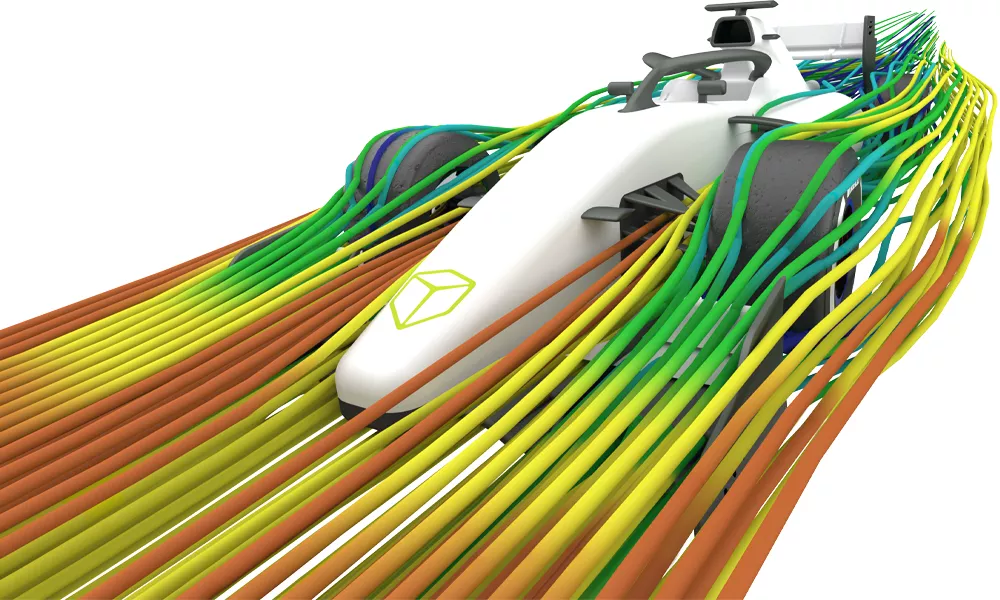
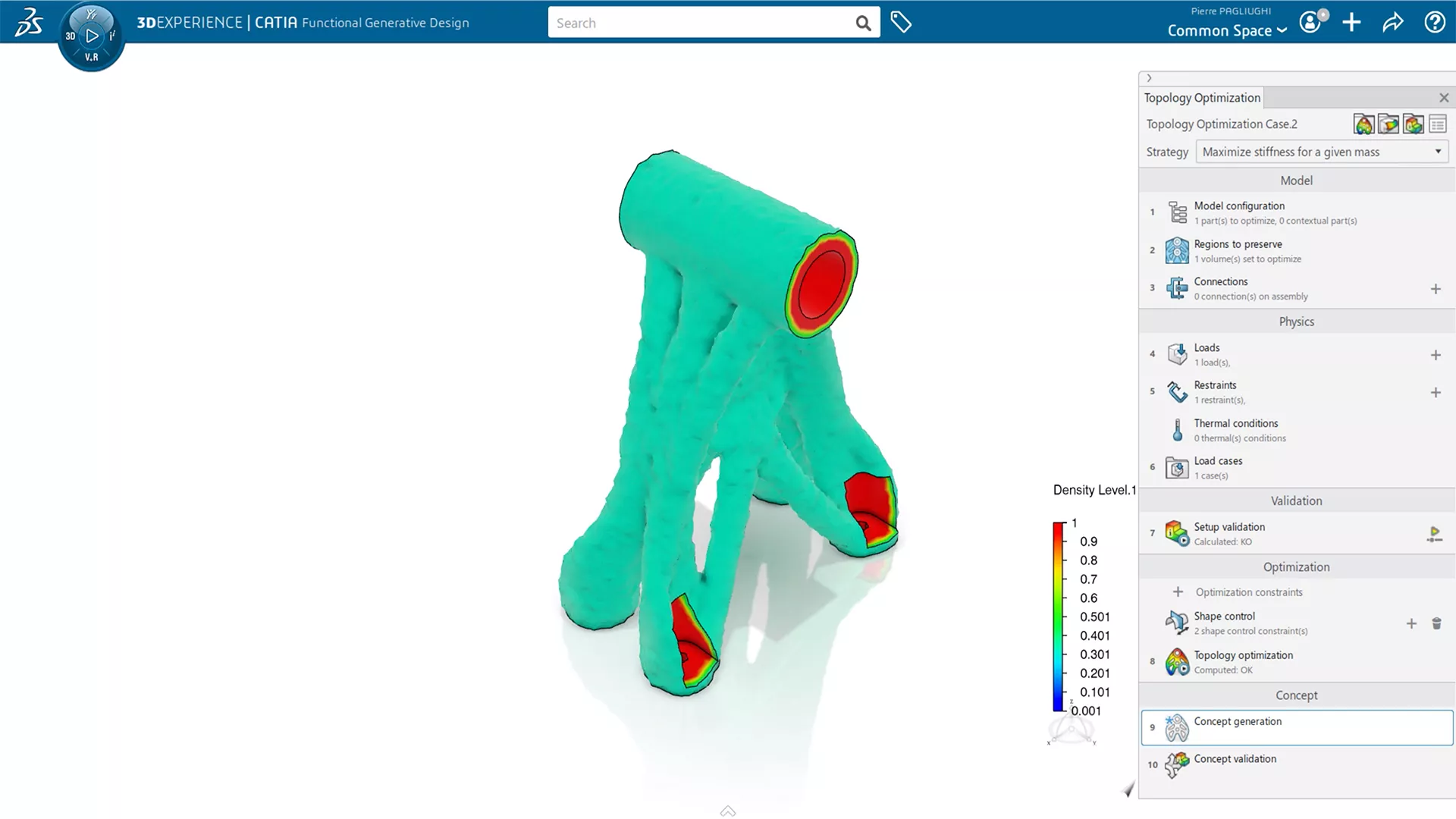
Trial and error isn't the only way to find a working design. With 3DEXPERIENCE GENERATIVE DESIGN, you define the design space in CAD and the functional requirements as FEA or CFD, and the simulation loop converges on the optimal geometry according to your needs.
A New Application for Industry-Leading Tools
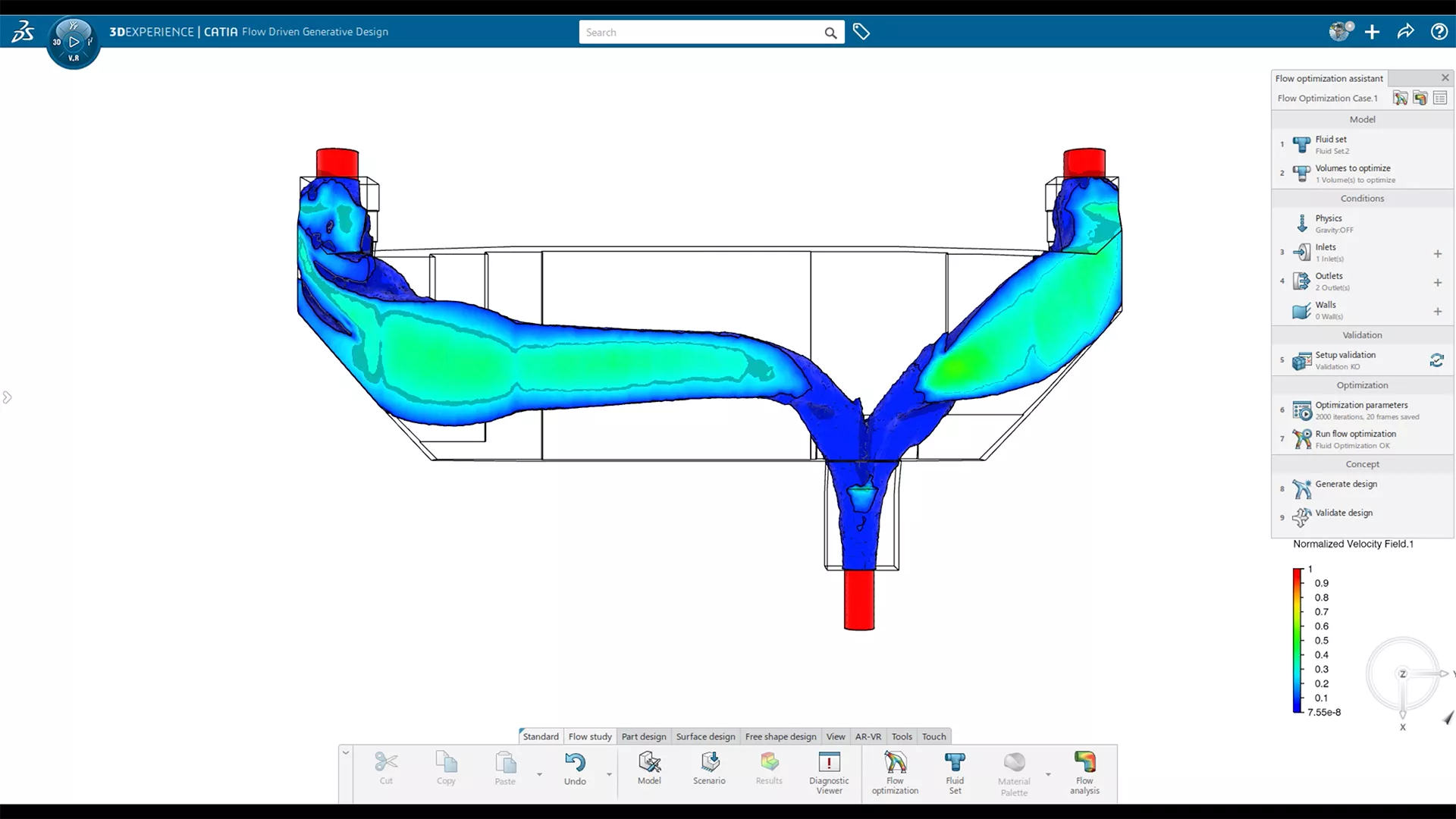
Setup your design optimization tasks and refine the output with CATIA -based 3D CAD tools. 3DEXPERIENCE SIMULATION solvers power the generative design process that accurately optimizes for stress, stiffness, frequency, mass, flow characteristics, and much more.
For Experts and Nonexperts Alike
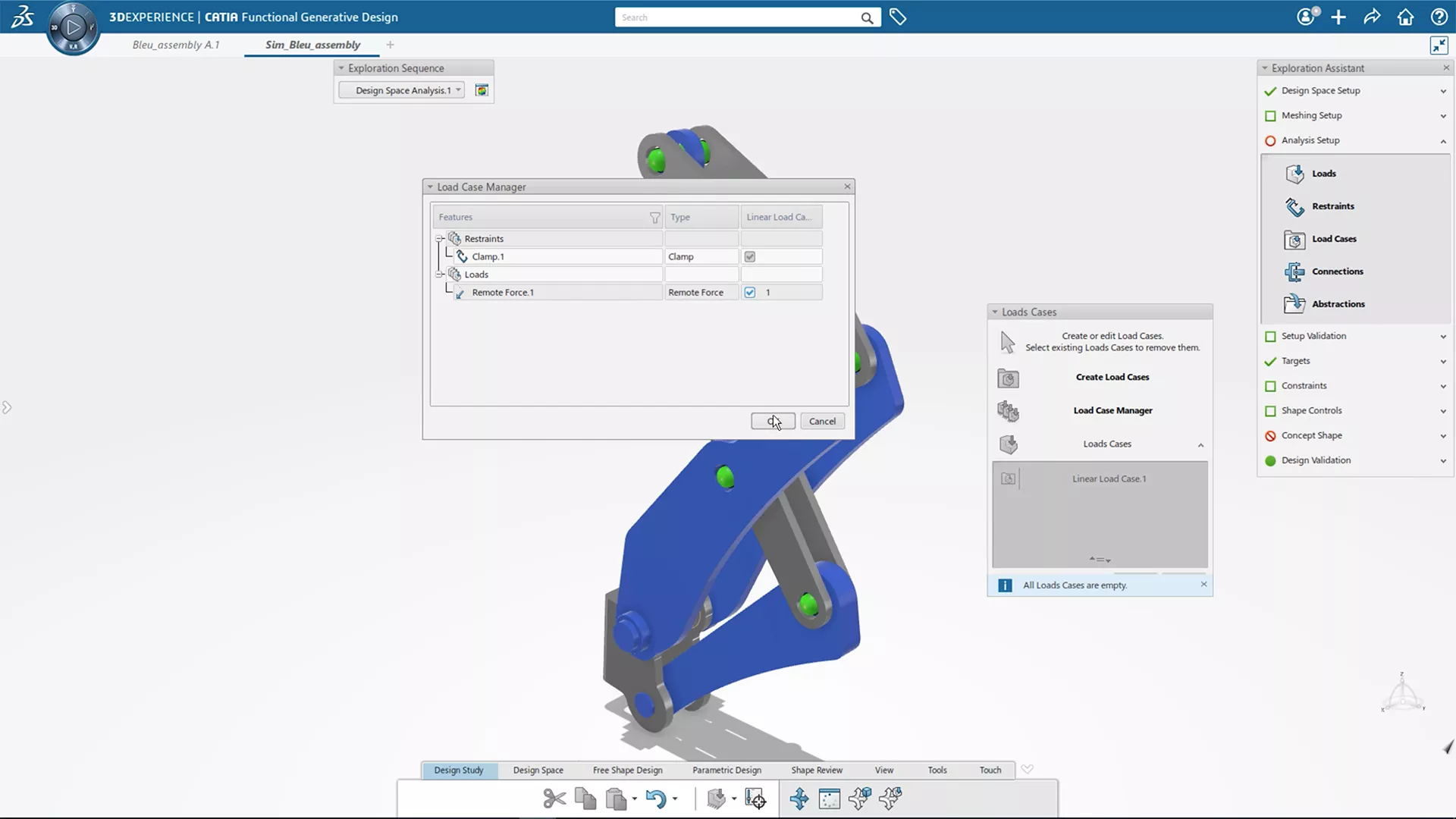
Workflow assistants, clean interface, and cloud PDM integration make it easy to use the tools and work with others in the process as you optimize designs, compare variants, balance KPIs, and make the right designs decisions.
3DEXPERIENCE GENERATIVE DESIGN FEATURE MATRIX
PRODUCT TIER
SOLIDWORKS
Simulation Professional
Function-Driven
Generative Designer
Structural Generative Designer
Structural Generative Engineer
Native CAD Link (SOLIDWORKS)
Seamlessly use your original SOLIDWORKS geometry for your optimization.
Native CAD Link (CATIA)
Seamlessly use your original CATIA geometry for your optimization.
-
Native CAD Link (Other)
Seamlessly use your original NX, Creo, or Inventor geometry for your optimization.
-
CATIA Simulation Model Preparation
Lightweight CATIA app for simplifiying CAD for use in simulation.
-
-
-
CATIA Part Design Essentials
Basic CATIA CAD app for creating and editing simple geometry, excellent for creating analytic surfaces.
-
CATIA Assembly Design
CATIA funtionality for placement and positioning of parts in an assembly.
-
-
CATIA Imagine & Shape Design
CATIA CAD app for creating organic shapes through subdivisional modeling.
-
-
CATIA Generative Wireframe & Surface
CATIA CAD app for creating complex geometry through hybrid modeling techniques.
-
CATIA Sheet Metal Design
CATIA CAD app specializing in sheet metal design features. Great for bead optimization users.
-
-
-
Topology Optimization
Fills a prescribed volume with the minimum mass in order to achieve design/performance target(s).
Shape Optimization
Gradually reshapes the prescribed surfaces of the selected part(s) in order to achieve design/performance target(s).
-
-
Bead Optimization
Builds up bead patterns on the prescribed surfaces of a shell part(s) in order to achieve design/performance target(s).
-
-
Single-Variable Optimization
Leverage a single parametric input (CAD dimension, material assignment, load magnitude, etc.) to optimize a design.
Multi-Variable Optimization
Leverage multiple parametric inputs to generate an optimal design.
-
Full Design of Experiments (DOE)
Enables true Monte Carlo analysis and weighted optimization controls.
-
-
-
Assembly Capability
Optimize design of a whole assembly (as opposed to individual parts) to achieve design/performance target(s).
-
Linear Static Scenarios
Optimize for performance in virtual tests for static loading of linear materials.
Frequency/Buckling Scenarios
Optimize for performance in virtual tests for resonant modes and linear buckling.
Fatigue & Durability Scenarios
Optimize for performance in virtual tests for fatigue and durability.
-
-
-
Nonlinear Static Scenarios
Optimize for performance in virtual tests for static loading featuring nonlinear materials, large deformation, complex interactions, etc.
-
-
-
Explicit Dynamic Scenarios
Optimize for performance in virtual tests of high-energy and time-dependent events.
-
-
-
Parametric only
SOLIDWORKS Simulation
SOLIDWORKS generative design capabilities are part of SOLIDWORKS Simulation Professional, which can be used for traditional FEA tasks, outside of any optimization process. Key capabilities include linear static, frequency, and fatigue analysis.
-
-
-
3DEXPERIENCE STRUCTURAL
Includes Structural Analysis Engineer, the most advanced 3DEXPERIENCE STRUCTURAL role, which can be used for traditional FEA tasks, outside of any optimization process. Key capabilities include nonlinear static, explicit dynamic, and fatigue analysis, with extensive support for advanced material behavior and complex interactions.
-
-
-
Base Core Compute
(Local)
How many CPU cores can be used to solve simulations and optimizations on the local machine without additional licensing.
Unlimited
4
4
0
Cloud Compute Access
The ability to solve simulation and optimization workloads on 3DEXPERIENCE cloud infrastructure rather than local machines.
-
Base Core Compute (Cloud)
How many CPU cores can be used to solve simulations and optimizations on the cloud without additional licensing.
-
4
4
0
Estimated Effective Core Compute Limit (Local or Cloud)
The core count after which adding more CPU cores produces limited or adverse results. Highly variable depending on analysis.
12-24
16-32
16-32
32-192
3DEXPERIENCE GENERATIVE DESIGN Products
-
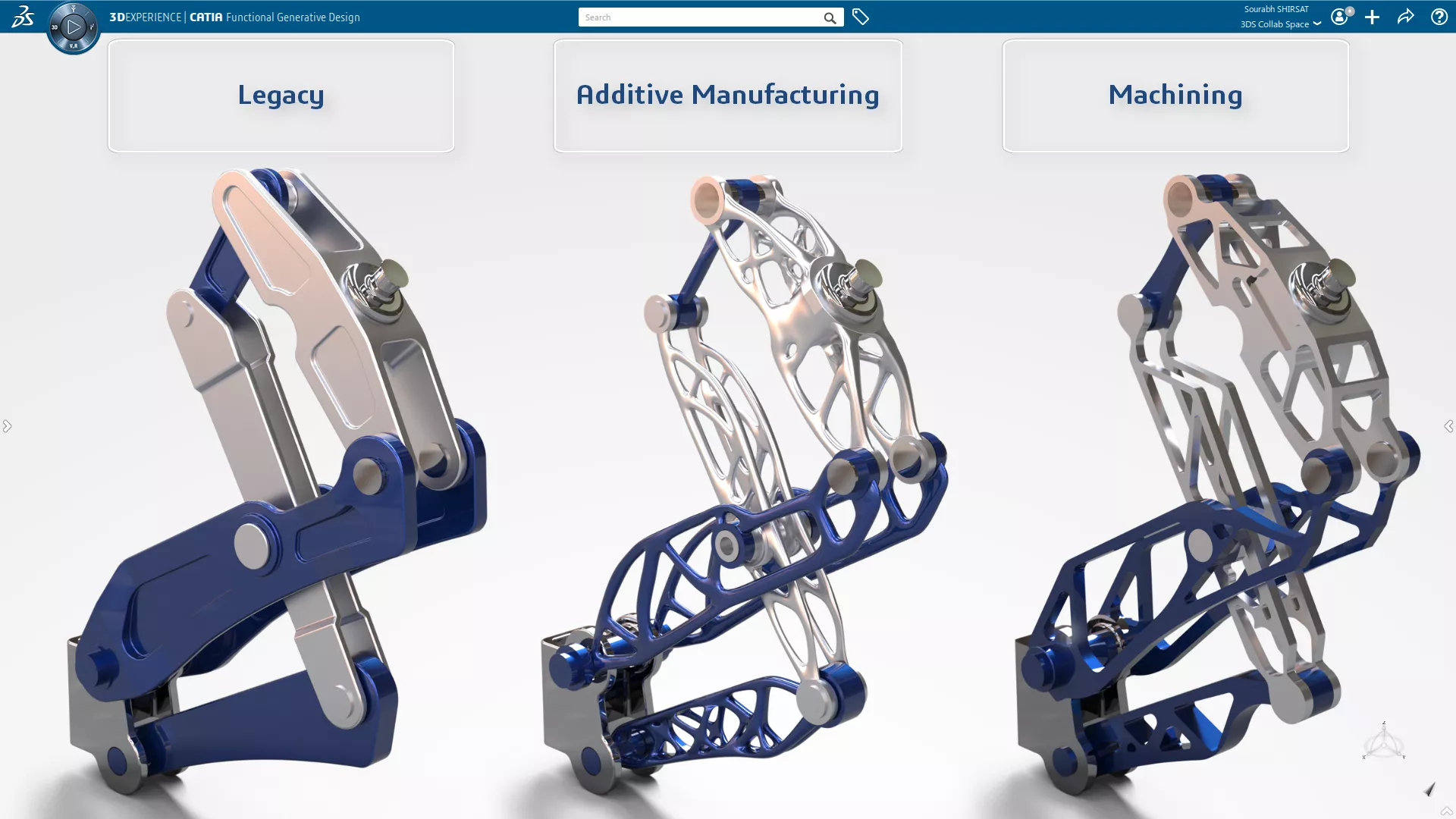

Function Driven Generative Designer
- Automatically generate optimized concept CAD based on design and functional requirements, and refine the results with CATIA tools.
- Key Features:
- Workflow Assistant intuitively guides setup
- Import, defeature, and directly edit data from any CAD system
- Define functional requirements through linear static and frequency simulations
- Optimize design space, adhering to design/manufacturing constraints
- Design generation powered by Abaqus solver loop "under the hood"
- Refine concept CAD output using best-in-class CATIA tools
- Includes 4-core cloud compute (access more with additional purchase) - Typically used by:
Designers, particularly in additive manufacturing -
-
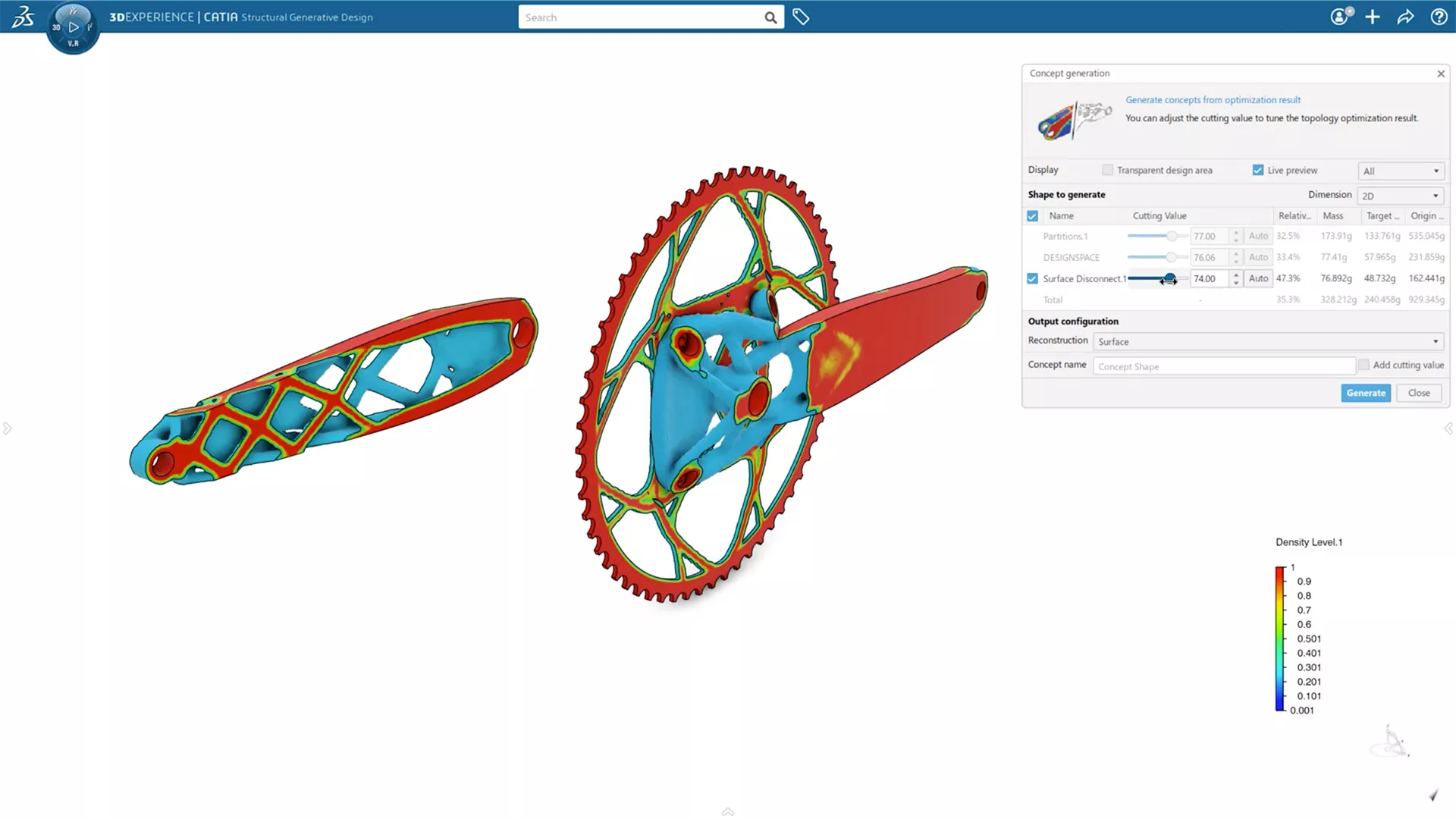

Structural Generative Designer
- Automatically generate optimized concept CAD based on design and functional requirements, and refine the results for additive and subtractive manufacturing with CATIA tools.
- Key Features:
- Workflow Assistant intuitively guides setup
- Import, defeature, and directly edit data from any CAD system
- Define functional requirements through linear static and frequency simulations
- Optimize design space, CAD parameters, or shaped surfaces, adhering to design/manufacturing constraints
- Design generation powered by Abaqus solver loop "under the hood"
- Refine concept CAD output using best-in-class CATIA tools
- Includes 4-core cloud compute (access more with additional purchase) - Typically used by:
Designers and design engineers in additive and subtractive manufacturing -
-
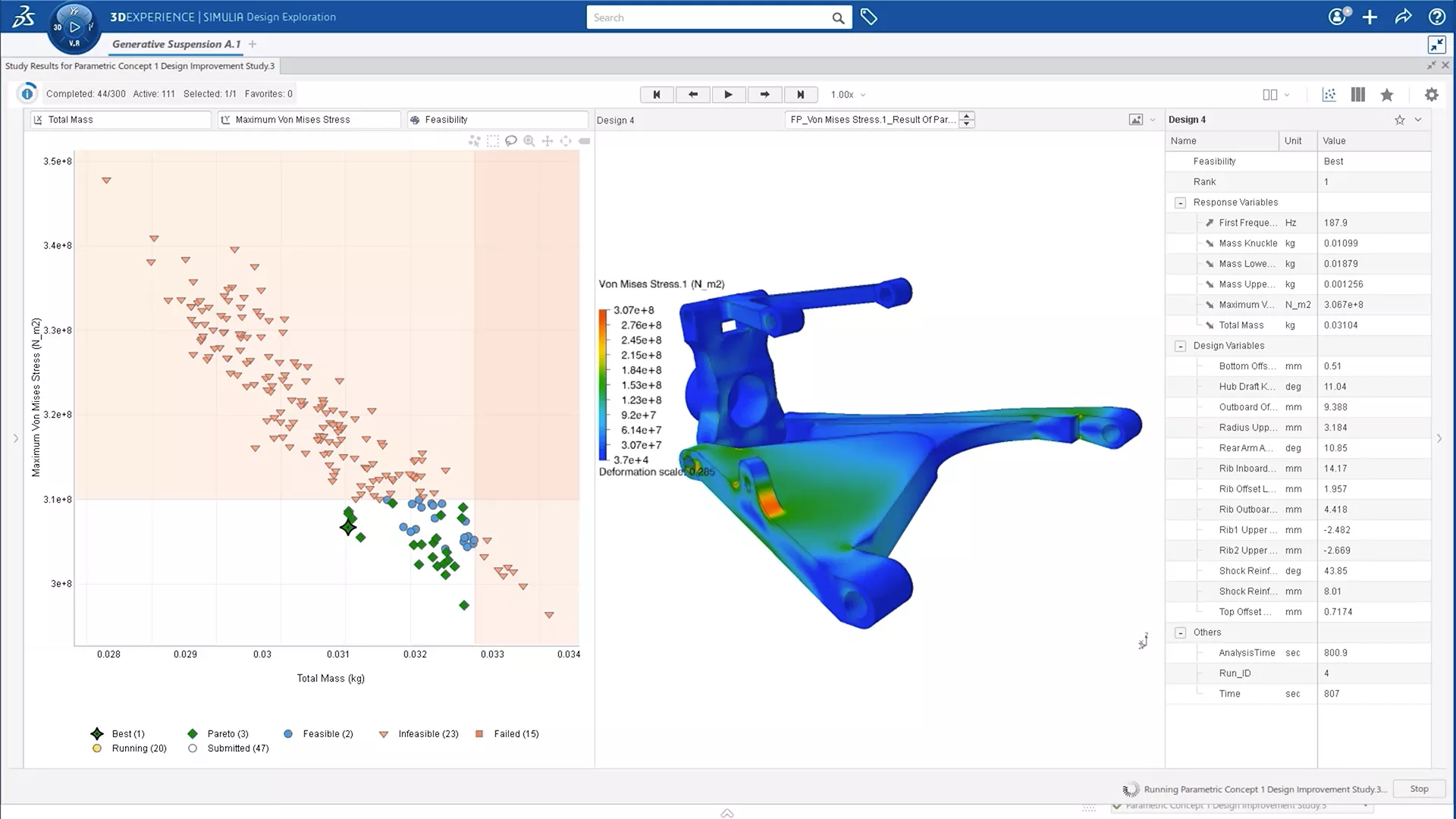

Structural Generative Engineer
- Automatically generate optimized concept CAD based on the most complex design and functional requirements, using the full power of 3DEXPERIENCE STRUCTURAL simulation.
- Key Features:
- Workflow Assistant intuitively guides setup
- Import, defeature, and directly edit data from any CAD system
- Define functional requirements through full nonlinear, multistep, static, dynamic, or fatigue Abaqus simulation
- Optimize design space, CAD parameters, or shaped surfaces, adhering to design/manufacturing constraints
- Design generation powered by Abaqus solver loop "under the hood"
- Full 3DEXPERIENCE STRUCTURAL suite for pure analysis as well - Typically used by:
- Advanced design engineers
- Full-time analysts working closely with designers -
-
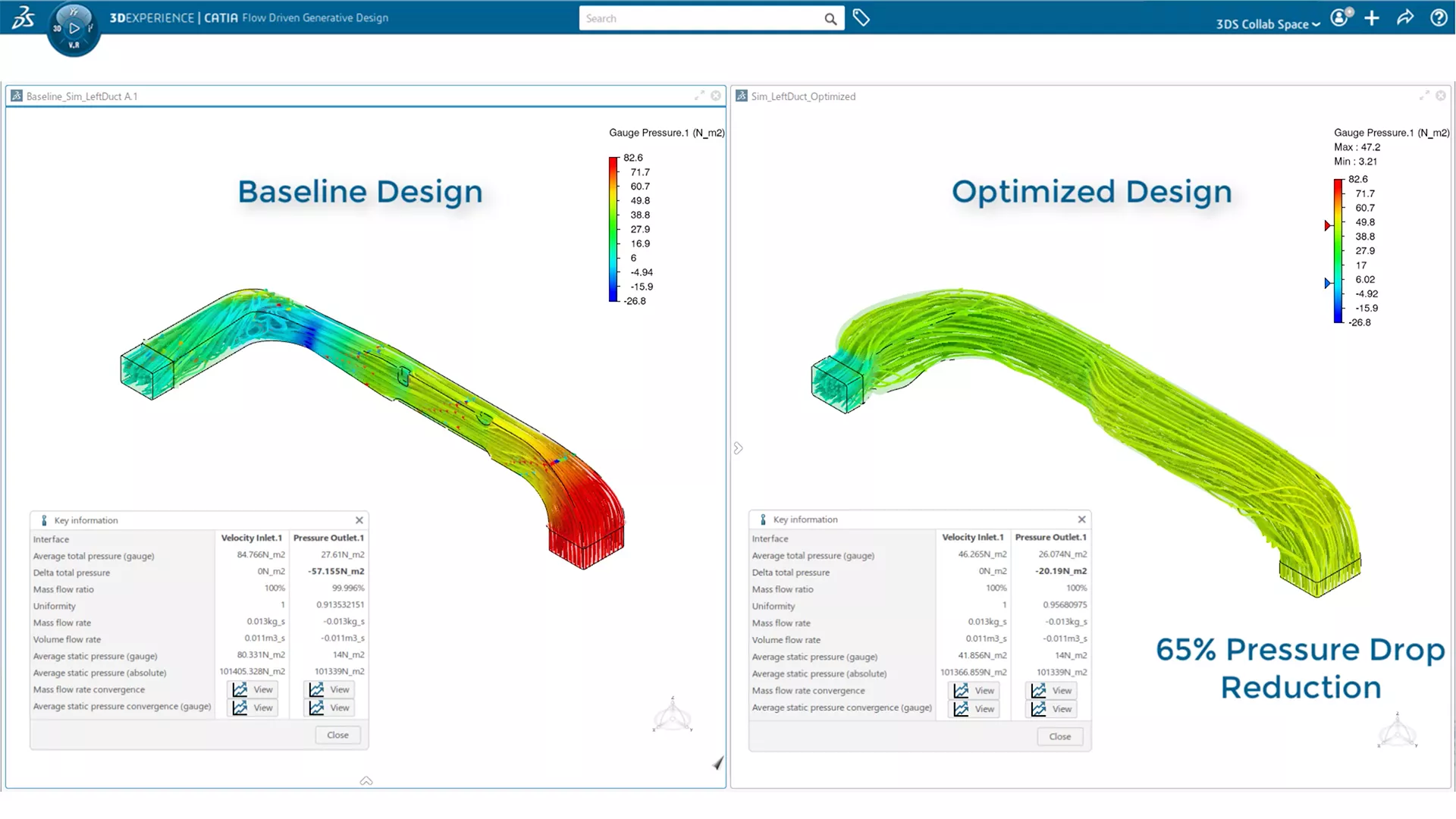

Flow Driven Generative Designer
- Automatically generate flow-optimized concept CAD based on design and functional requirements, and refine the results with CATIA tools.
- Key Features:
- Workflow Assistant intuitively guides setup; Import, defeature, and directly edit data from any CAD system
- Define functional requirements through CFD simulations
- Flow-optimize design space, adhering to design/manufacturing constraints
- Design generation powered by 3DEXPERIENCE FLUIDS RANS solver loop "under the hood"
- Refine concept CAD output using best-in-class CATIA tools
- Includes 8-core cloud compute (access more with additional purchase) - Typically used by:
Designers responsible for optimal fluid flow in their manufactured parts -
-
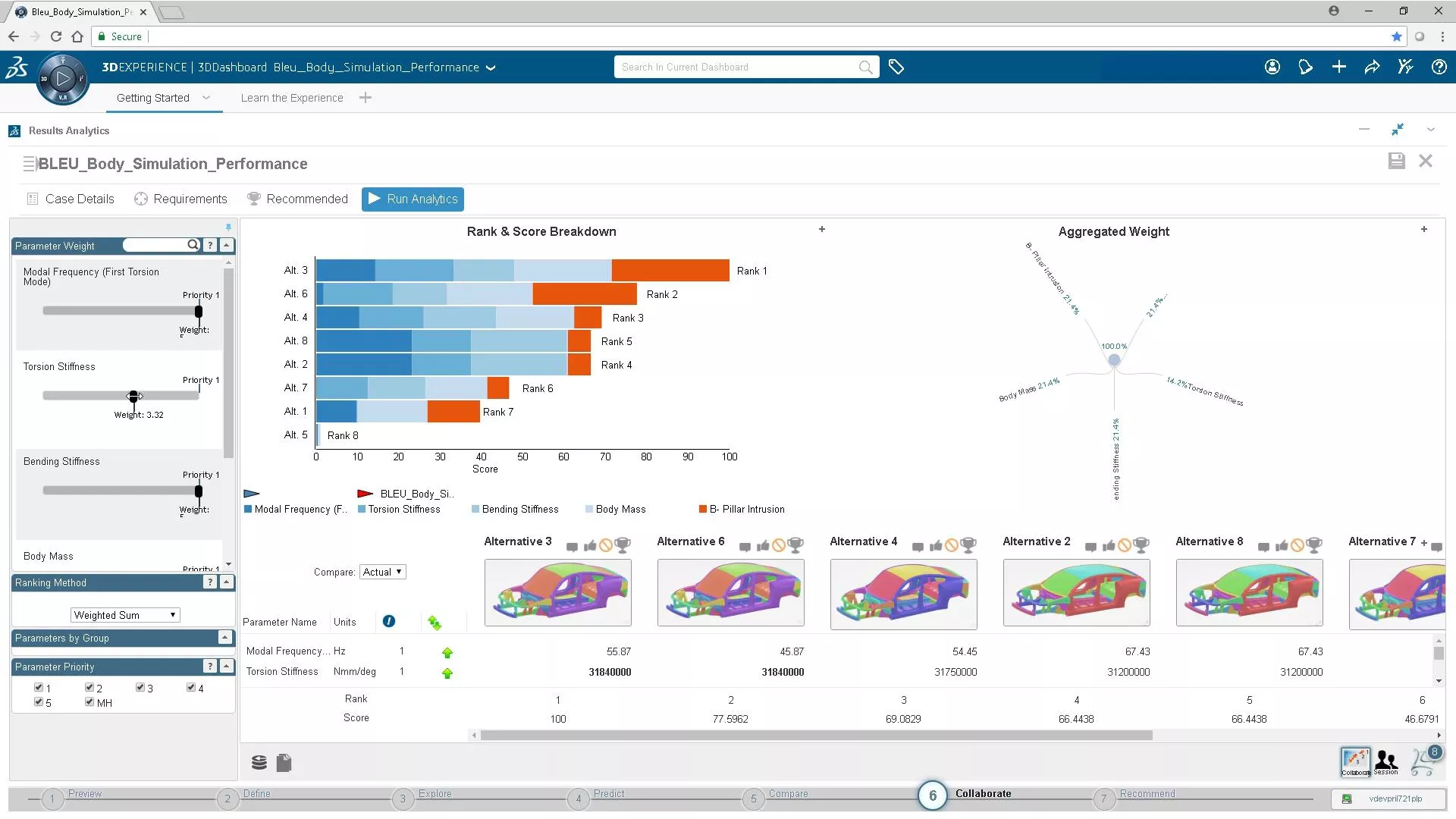

Multidisciplinary Optimization Engineer
- Automate the exploration of design alternatives against complex performance objectives, using cloud computing and advanced data analytics to understand what is the best decision and why. Learn More >
- Key Features:
- Systematically and automatically explore design variations
- Conduct requirements, failure, sensitivity, and trade-off analyses
- Build optimization processes leveraging 3DEXPERIENCE SIMULATION tools, CAD data on CLOUD PDM, and third-party integratations
- Industry-standard algorithms for design-of-experiments, parametric optimization, surrogate model generation, and uncertainty quantification
- Visualization and 3D post-processing tools made for extremely large data sets
- Build design/simulation templates for knowledge capture and reuse - Typically used by:
- Advanced design engineers
- Full-time analysts working closely with designers
- Analysts who need designers to be able to replicate their work -
Frequently Asked Questions
3DEXPERIENCE Generative Design is far more capable. It has a wider breadth of functionality as compared to topology optimization in SOLIDWORKS Simulation. 3DEXPERIENCE has the capability to do topology optimization on complex assemblies in linear and nonlinear analyses, shape optimization for stress distribution improvements, and bead optimization for thickness optimization. SOLIDWORKS Simulation is solely capable of Topology Optimization on part files using linear-elastic material properties and undergoing static loading.
No. Analytical generative design tools are built for the CAD designer to use during the design process, and match their level of CAE capability. Use guided wizards to setup anything from simple load cases on single part files to nonlinear analyses on assemblies. These assistants guide the designer through defining potential constraints and where material can be removed. The complex process of material removal and iteration all happens automatically during the solve, allowing the designer to focus on generating solutions.
Yes. Generative Design can be based around so-called "dumb solids". The original CAD modeling does not need to be done on the 3DEXPERIENCE Platform in order to define areas of the components that can be generatively (re)designed. The Platform is capable of importing all standard file types (STEP, Parasolid, etc.) and works alongside its mainline CAD tools xDesign, SOLIDWORKS, and CATIA.
Not necessarily -- both local and cloud computing are available. When solving using the 3DEXPERIENCE Platform's cloud compute environment, the local machine does not need to maintain connectivity. If you don't want to monitor progress, you can close your laptop, work on other projects, or turn off your machine while the study runs.
For highly demanding optimization studies (many load cases, many parts, complex part interactions, advanced material behavior), 3DEXPERIENCE Generative Design responds very well to scaling compute power. While the 3DEXPERIENCE cloud offers advanced GPUs, hundreds of CPU cores, and terabytes of RAM; users owning high-core-count CPUs, multi-CPU workstations, or local HPC clusters may use these local resources instead.
Function-Driven Generative Designer is capable of limited topology optimization and provides a freeform surfacing CAD suite to generate geometry based on the optimization, whereas Structural Generative designer contains the full capability of the Abaqus solver suite, but provides a limited CAD suite.
More specifically, when comparing analysis capabilities, Function-driven generative designer solely supports linear structural analysis. Structural Generative Design is capable of everything from nonlinear optimization, fatigue analysis, to complex materials and dynamic assemblies. Typically companies supply many Function-Driven Generative Designer roles to designers to analyze common, simple physics for the majority of their product use-cases, and Structural Generative Designer is used in smaller teams for final detailed validation.
Yes. Manufacturing constraints exist for machined, casted, or injection molded parts to maintain design requirements like draft angle and milling direction, whereas shape and bead optimization is used for thin sheet metal or stamped components, resulting in lighter, stiffer designs with optimized bead geometry and placement.
Topology Optimization can be applied to both conceptual and production-ready designs. It includes manufacturing controls that allow designers to maintain draft angles suitable for plastic or metal casting and forging applications. This enables control over parting lines, pull directions, and rib or stiffener placement. In addition, milling and extrusion directions can be defined to ensure that pockets and features remain machinable using 3-axis or 5-axis processes.
Universal simulation tokens or metered credits can both be used to access HPC outside of the base-level embedded (included) compute, similar to on-premise Abaqus. For detailed information on tokens, credits, and consumption rates, refer to our Abaqus Buying Guide.
For maximum efficiency, use CATIA's advanced AI-driven automation tools and dedicated reconstruction assistants for milling, casting, and rib-based designs to generate smoothed sub-division surfaces fitted to the topology-optimized result. If using SOLIDWORKS, a tesselated mesh or graphical body is used as reference for manual reconstruction using standard boss and surfacing modeling. CAD modeling of generative shapes can be performed in both CAD tools, however CATIA enables efficient, design intent-driven remodeling of optimized geometry.
More Design Tools For You
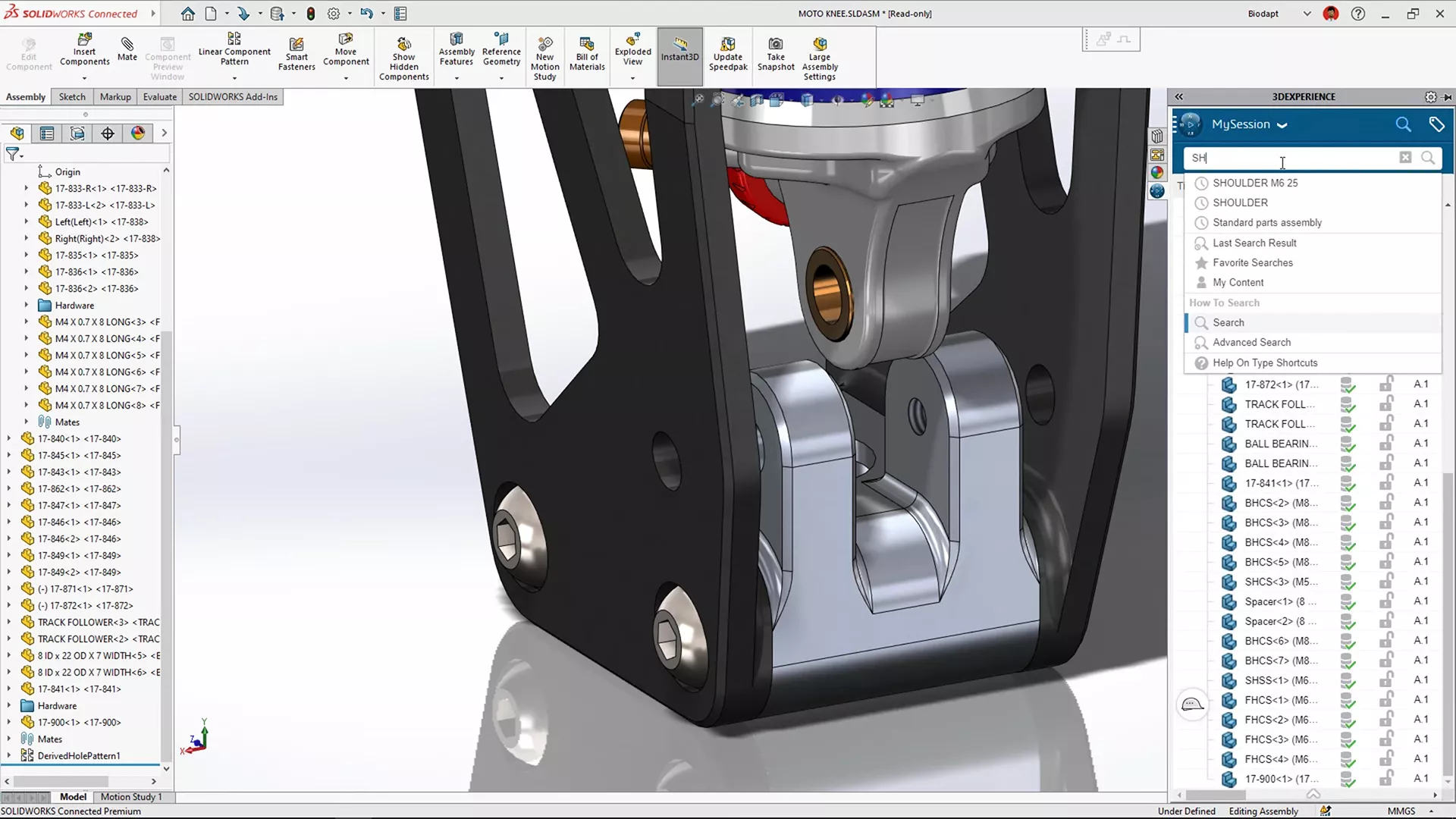
3DEXPERIENCE SOLIDWORKS
Desktop SOLIDWORKS with a cloud connection so you can work from anywhere, collaborate efficiently, and scale quickly.
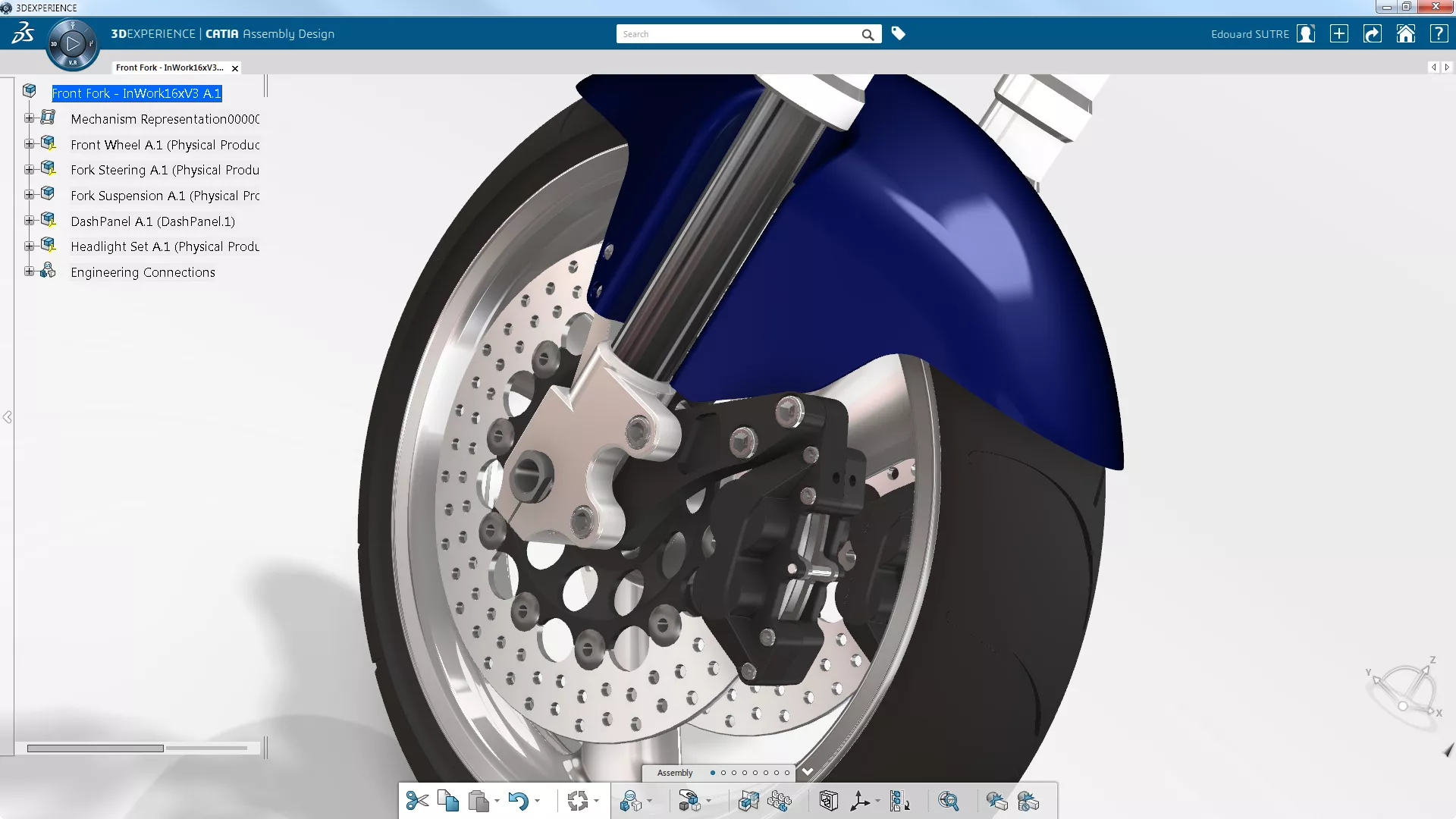
3DEXPERIENCE CATIA
The cloud-integrated evolution of the flagship, ultra-powerful CATIA design software.
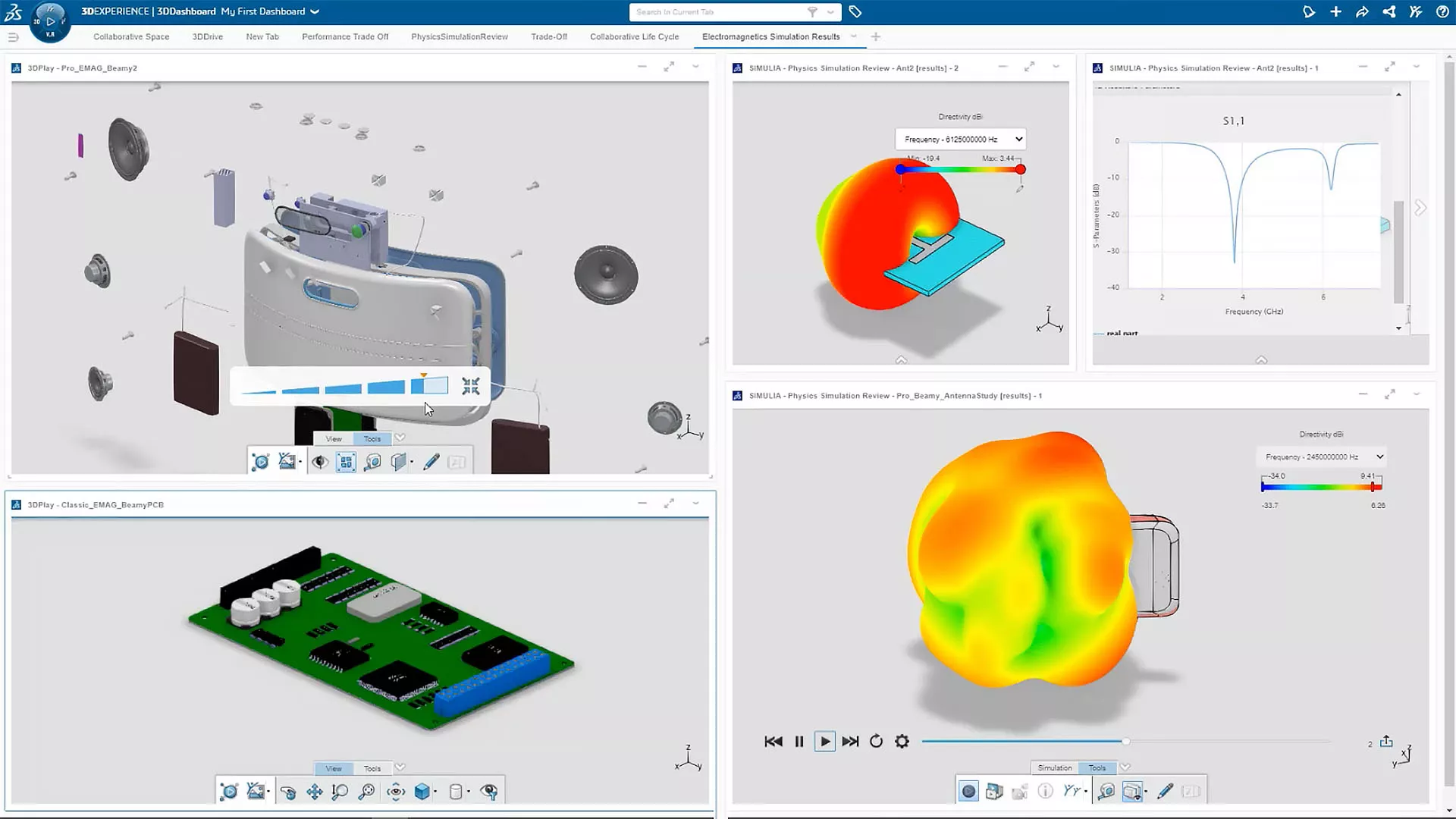
3DEXPERIENCE SIMULATION
Cutting-edge engineering simulation and virtual prototyping made accessible and affordable.
Additional Resources
Take Advantage of GoEngineer’s Extensive Knowledge Base and Resources

Find a Solution
Our robust Knowledge Base contains over 12,000 resources to help answer your product design questions. From basic CAD questions to in-depth guides and tutorials, find your solution here. Find a Solution

PROFESSIONAL TRAINING
Improve your skills with professional training and certifications in SOLIDWORKS, CAM, 3D Printing, and 3D Scanning offered four ways: self-paced, online, on-site, or in-classroom. Certified Training Courses

BLOG
#1 Technical Resource Worldwide - Right at your fingertips. Search or browse through hundreds of SOLIDWORKS tips & tricks, additive manufacturing product developments, announcements, how-to guides, and tutorials. Blog

YouTube Channel
Our YouTube channel hosts hundreds of educational tutorials, product demonstrations, recorded webinars, and best practices for all of our products and services. GoEngineer's YouTube Channel
ONLINE STORE
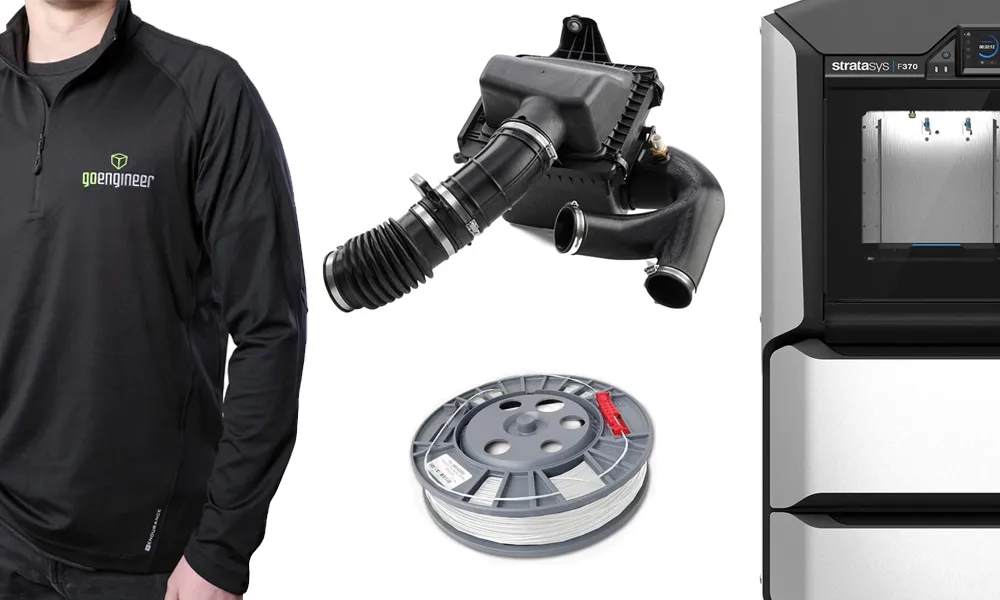
Order 3D printing materials and consumables, enroll in SOLIDWORKS training classes, and buy official GoEngineer gear directly from our online store. Online Store
WEBINARS
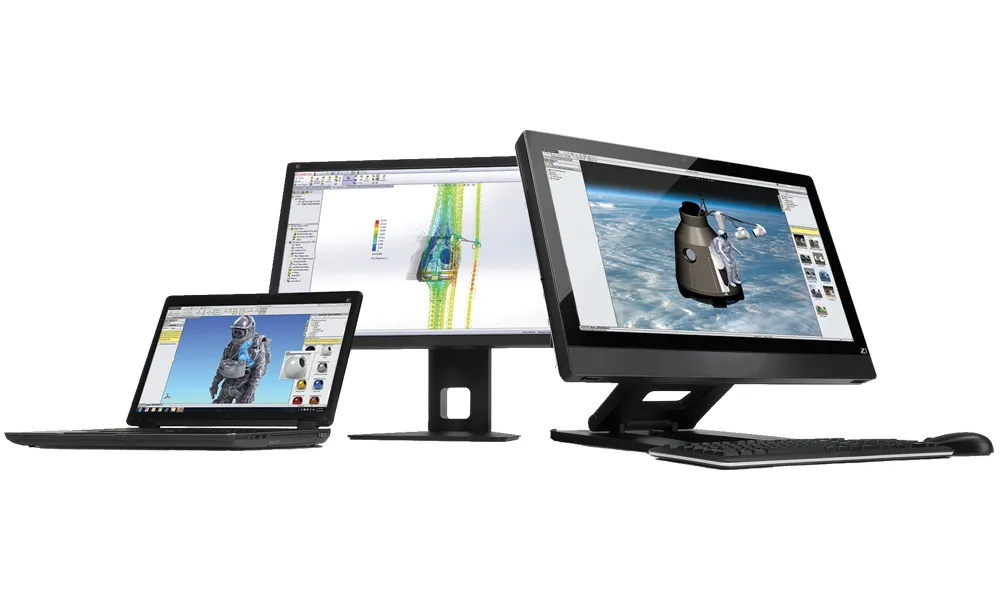
Our engineering webinars are hosted by some of the top experts in the industry. They are always recorded, always free, and always offer a live Q&A. WEBINARS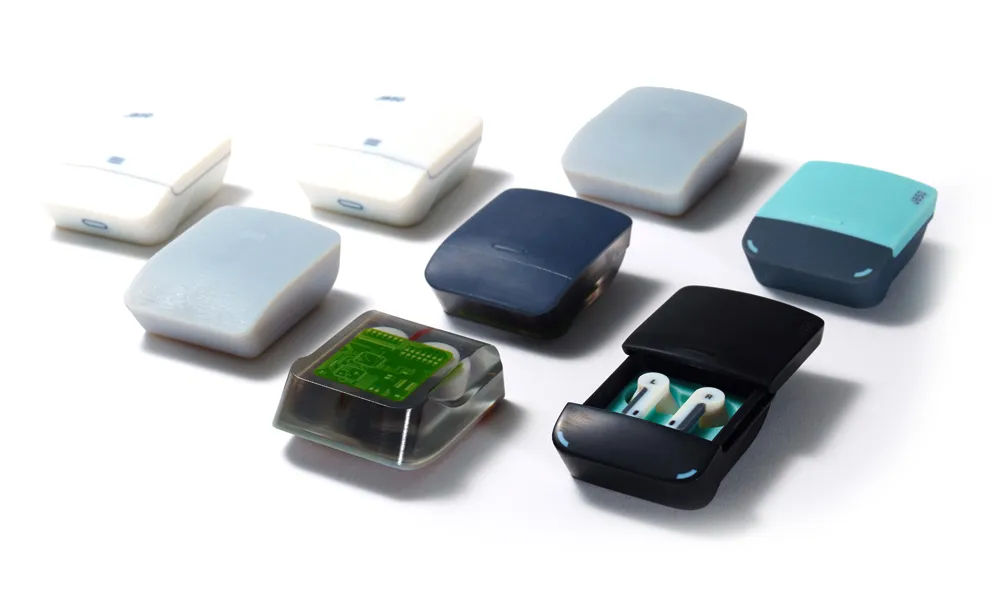
3D Printing Services
Need to 3D print a part? Our Additive Manufacturing experts will 3D print your part and deliver it to you using the latest technology on one of our professional FDM, PolyJet and SL 3D printers. 3D Printing Services