Create Custom Templates and Sheet Formats in SOLIDWORKS

Table of Contents
At times, SOLIDWORKS users will need to customize their drawings to meet company and industry standards. This generally starts with modifying an existing drawing template and sheet format, whether it’s the default templates and sheet formats included with SOLIDWORKS or an existing sheet format used by their company. This allows us to change everything that first appears in the drawing when you create a new one, along with several items you can’t see initially, such as settings or drafting standards.
What Most People Get Wrong
There are two ways to customize what first appears on the screen when you make a new drawing. You can customize the drawing template and the sheet format.
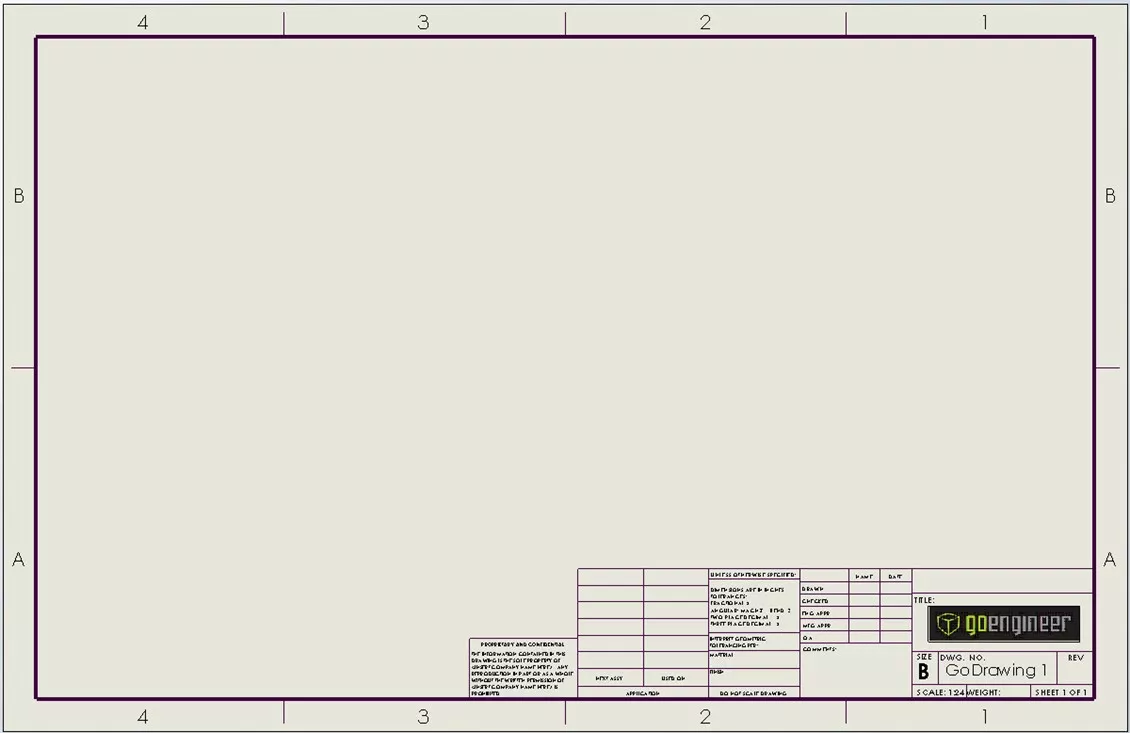
The sheet format is what you initially see in the drawing, such as the title block. The template contains things like settings and properties, and tells SOLIDWORKS which sheet format to use. To learn more about the differences between the two, check out this article: What's the Difference? Drawing Templates vs Sheet Formats in SOLIDWORKS
Creating the Sheet Format
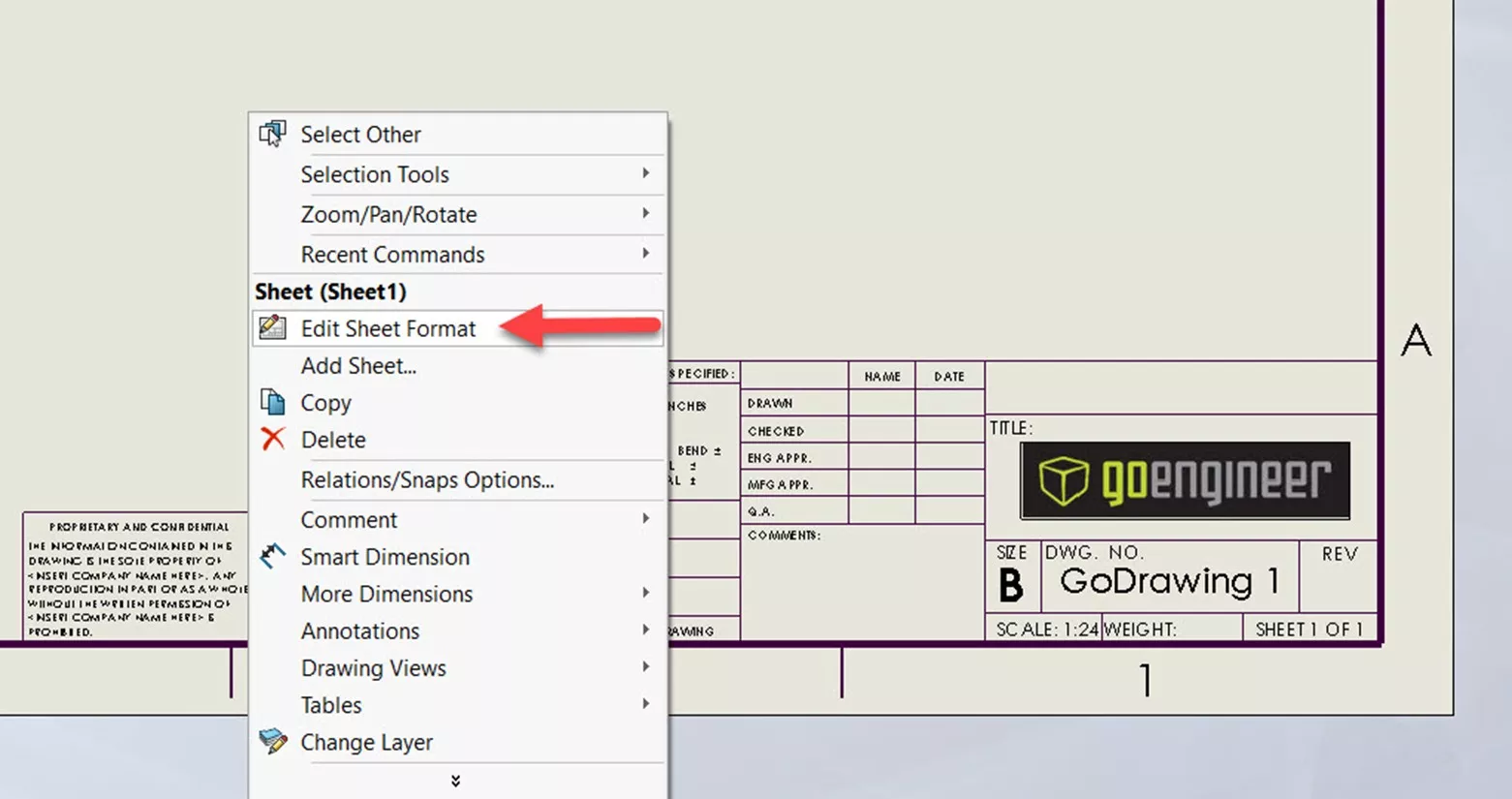
When SOLIDWORKS users think of editing a drawing template, they’re usually thinking of the sheet format, specifically the title block. To do this, right-click in the drawing and select Edit Sheet Format from the flyout menu. Make the necessary changes, such as linking various fields to custom properties so they populate automatically in each drawing. To change a field, double-click and then edit in the resulting dialog boxes or the PropertyManager.
Applying the Sheet Format
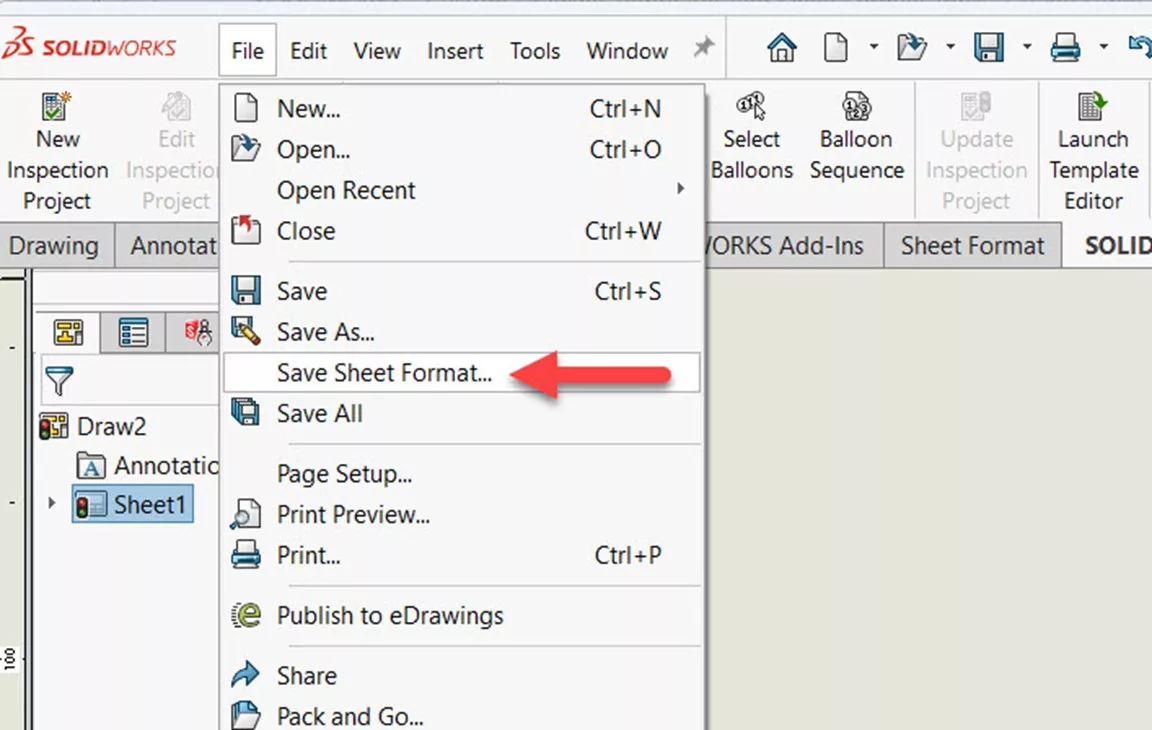
Once the changes are made to the sheet format, you need to save the sheet format and then apply the sheet format. To save it, click File > Save Sheet Format.
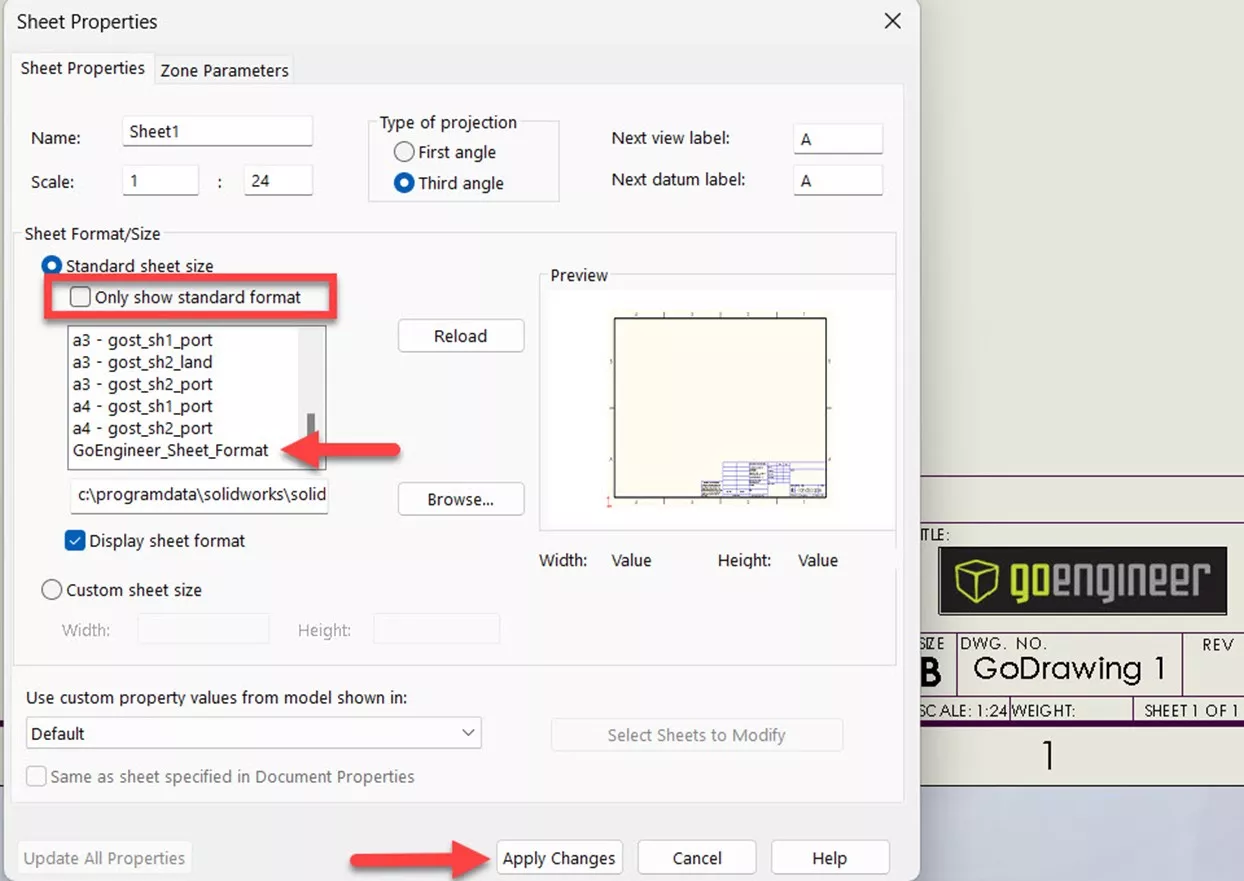
After saving the sheet format, right-click in the drawing again and select Properties from the flyout menu. Deselect Only Show Standard Format (or select Browse) and then select the desired sheet format. Click Apply Changes.
Saving the Template
Now that you have created, saved, and applied the sheet format, the next step is to save the template. You are welcome to make changes to the template first, like specifying the drafting standard under Tools > Options > Document Properties. Feel free to make any changes in the Document Properties.
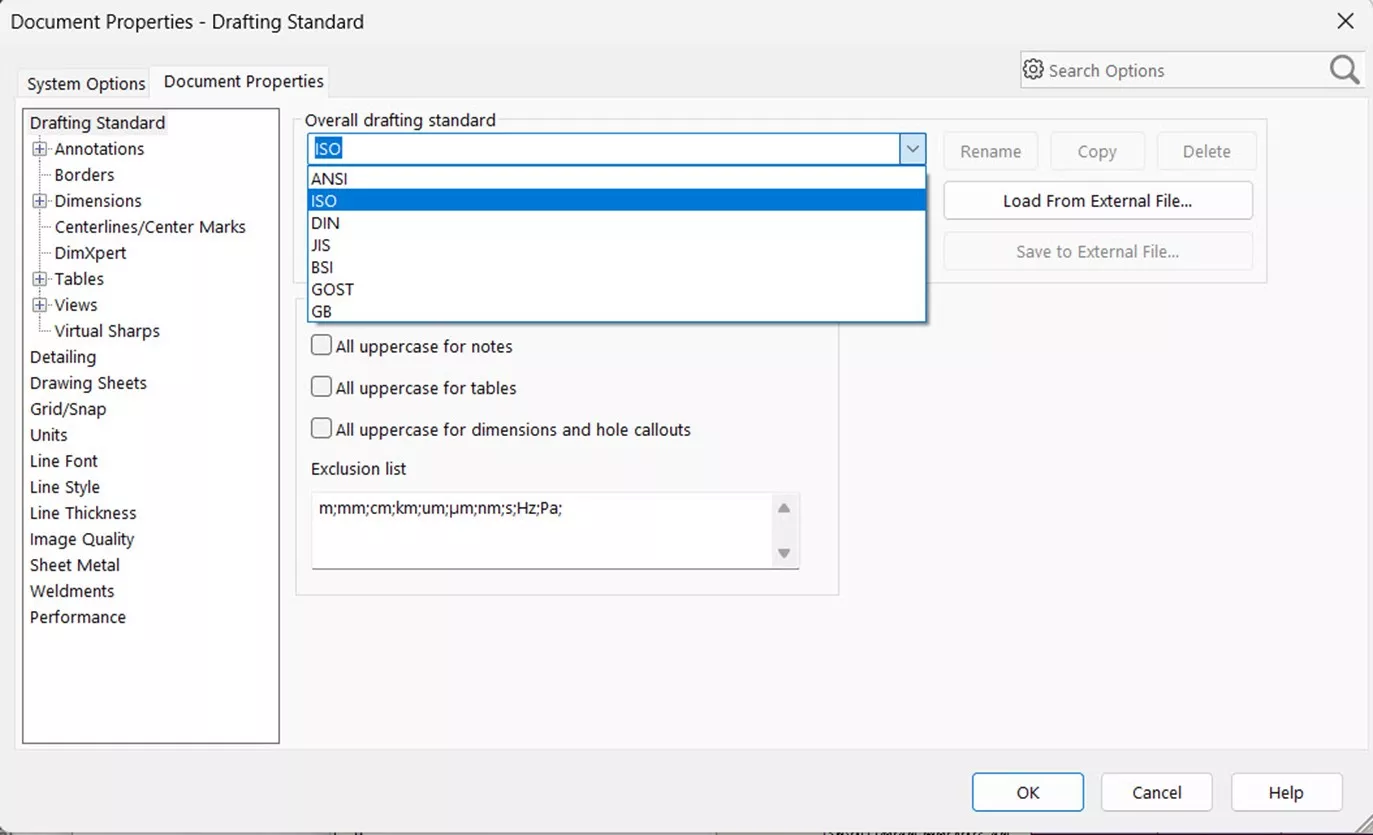
Now that the template is finished, click File > Save As and change the file type to Drawing Templates (*.drwdot). This will then change the save location to the default template folder, which you can change again if needed. Specify the desired template name and folder location before clicking Save.
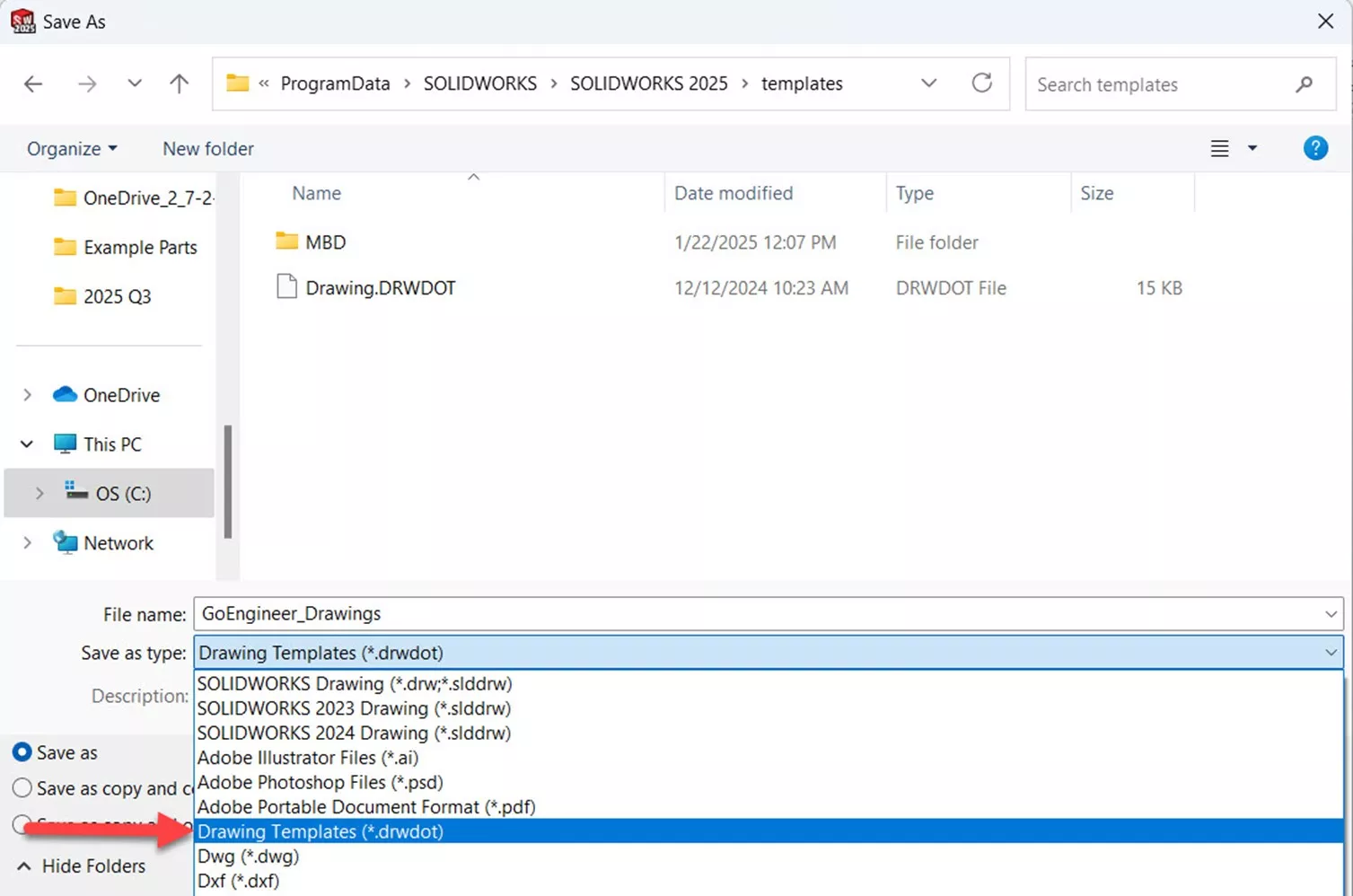
Specify New Default Template
The template is now finished, and you can specify it as the new default template for all new drawings moving forward. To do this, go to Tools > Options > System Options > Default Templates. Click the three dots and select your new template. If you saved the template to a new folder, make sure the folder is added under File Locations (just below Default Templates). Click OK in both windows, and you’re done!
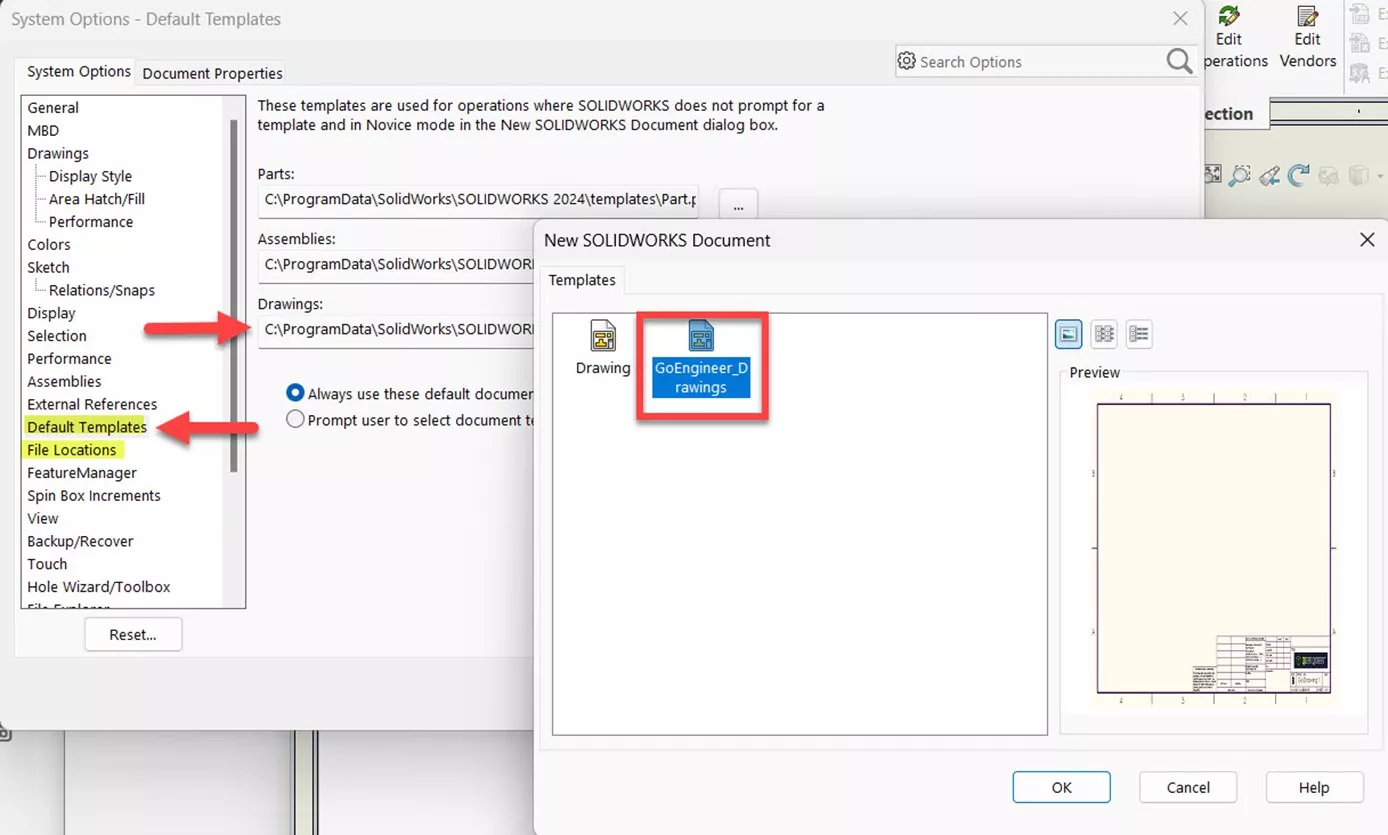
Want to learn more about SOLIDWORKS templates and sheet formats? Check out more tutorials and tips below, or check out the GoEngineer Community, where you can create forum posts, enter design contests, and answer questions from other SOLIDWORKS users.
SOLIDWORKS CAD Cheat Sheet
SHORTCUTS ⋅ MOUSE GESTURES ⋅ HOT KEYS
Our SOLIDWORKS CAD Cheat Sheet, featuring over 90 tips and tricks, will help speed up your process.

Related Articles
How to Update Templates in SOLIDWORKS
SOLIDWORKS Default Templates Error
Easily Create a Custom Weldment Cut List Template in SOLIDWORKS
Creating a Multi-Sheet Drawing Template in SOLIDWORKS
Applying a New SOLIDWORKS Drawing Sheet Format to Existing & Future Drawings

About Gary Ballentine
Gary Ballentine is a Mechanical Engineer based out of our Headquarters in Salt Lake City, Utah. He earned a Bachelor’s degree from the University of California, Davis, a certification in Technical Writing from San Francisco State University, and a Bachelor’s degree in Mechanical Engineering from the University of Utah. Gary has been part of the GoEngineer family since April 2019 as a Support Engineer and Certified SOLIDWORKS Instructor.
Get our wide array of technical resources delivered right to your inbox.
Unsubscribe at any time.