Why Industrial Additive Certification is the Ultimate Student Placement Multiplier

Table of Contents
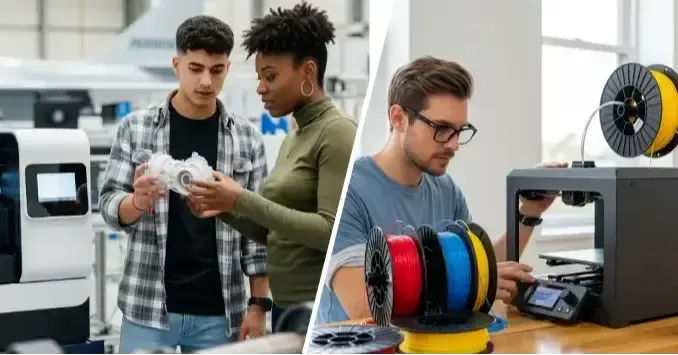
Walk into almost any middle school or high school maker space today, and you’ll find a fleet of desktop 3D printers. These machines have done a fantastic job of getting students excited about the initial concept of “making”. But as students transition from hobbyist exploration to professional engineering programs, a significant gap emerges.
The reality of modern industry is stark. Leading companies do not leverage personal desktop systems on their production floors. Employers in high-value sectors like aerospace, defense, and automotive aren’t just looking for graduates who can print plastic trinkets; they are hunting for candidates who understand material performance data, process controls, and quality systems.
The choice of hardware in the classroom determines whether a student learns how to troubleshoot a basic consumer printer or operate within a regulated manufacturing workflow.
Hidden Gaps in Regulated Engineering
Desktop-level systems serve a vital purpose as a low-cost entry point into 3D printing. However, for a university or technical college, relying solely on hobbyist-grade equipment can unintentionally handicap a student’s professional development.
In the industrial world, a part must be identical whether it’s printed on a Monday in Michigan or a Thursday in Texas. Achieving this requires rigid process controls and environmental stability that desktop machines simply cannot provide.
- Environmental & Process Control: Industrial platforms like Stratasys FDM (Fused Deposition Modeling) and PolyJet systems utilize highly controlled thermal environments and heated build chambers. This eliminates the temperature fluctuations that ruin complex prints, teaching students to rely on machine predictability rather than constant mechanical troubleshooting.
- The Invisible Workflow: Desktop machines obscure the realities of professional production. Industrial additive manufacturing demands a deep understanding of material traceability, advanced slicing parameters, and rigorous post-processing workflows, such as soluble support removal, vapor smoothing, annealing, and dimensional inspection.
- Standards and Compliance: In high-stakes environments, operations must align with strict quality management systems, like AS9100 or NADCAP. These frameworks are non-negotiable in regulated industries, yet they remain completely invisible to a student working on a hobbyist desktop machine.
Material Science with Flight-Ready Consequences
One of the strongest arguments for transitioning to industrial-grade Stratasys systems is moving beyond PLA (Polylactic Acid). While PLA is easy to print, it has virtually no place in functional, real-world engineering.
To truly prepare students for top-tier employers, they need hands-on experience with engineering-approved materials qualified to aerospace, defense, and industrial standards.
| Material Category | Regulatory & Real-World Applications |
| High-performance, flame-retardant thermoplastics compliant with FAR 25.853 flammability and FST standards. Actively used for flight-ready parts and ducting by aerospace primes. | |
 Nylon 12CF Nylon 12CF |
Carbon-filled composites used to engineer lightweight, high-strength manufacturing tools, replacing heavy metal jigs and fixtures on active factory floors. |
 Mult-Material PolyJet Mult-Material PolyJet |
Advanced photopolymers capable of simulating overmolding, varying shore hardness, and full-color realism to test complex mechanical assemblies. |

When a student understands how a material’s glass transition temperature, chemical resistance, and flame-retardant rating affect its application, they cross the line from hobbyist printing to practicing true material science.
The Stratasys Certification
A Resume Disruptor for Top-Tier Hiring
At GoEngineer, we often tell educators that the hardware is the vehicle, but the certification is the license. The Stratasys Additive Manufacturing Certification program bridges the gap between classroom theory and industrial application.
This certification doesn’t just validate that a student can hit print. It proves to hiring managers at leading companies that a graduate understands the entire additive lifecycle:
- Design for Additive Manufacturing (DfAM): Optimizing geometries to minimize material waste, manage orientation-dependent anisotropic strength, and design for specific industrial toolpaths.
- GrabCAD Print Proficiency: Mastery of industry-standard software to manage production job queues, estimate material yields, and manipulate advanced slicing parameters.
- Quality and “Fit & Finish”: Understanding the post-processing and inspection standards required to deliver a component that meets professional client specifications.
Seeing “Stratasys Certified” on a resume removes the guesswork for engineering recruiters. It provides immediate proof that the candidate can step onto the production floor and contribute on Day 1.

Investing in the Outcome
From Prototypes to Production
The workforce shift toward Industry 4.0 is built on utilizing additive manufacturing for spare parts, customized tooling, and low-volume end-use production runs. Desktop hobbyist machines simply cannot handle the quality control, batch consistency, and traceability required for this output.
By training students on certified, industrial-grade platforms, universities shift the academic mindset from temporary “prototyping” to true end-use digital manufacturing. When a student realizes the printer is an agile factory cell, they make the mental leap from technician to engineer.
The pitch isn’t about hardware durability; it’s about alignment. If we want our graduates to secure roles at leading companies, we must equip them with the exact tools, materials, and compliance standards those companies use every single day.
Are Your Students Prepared?
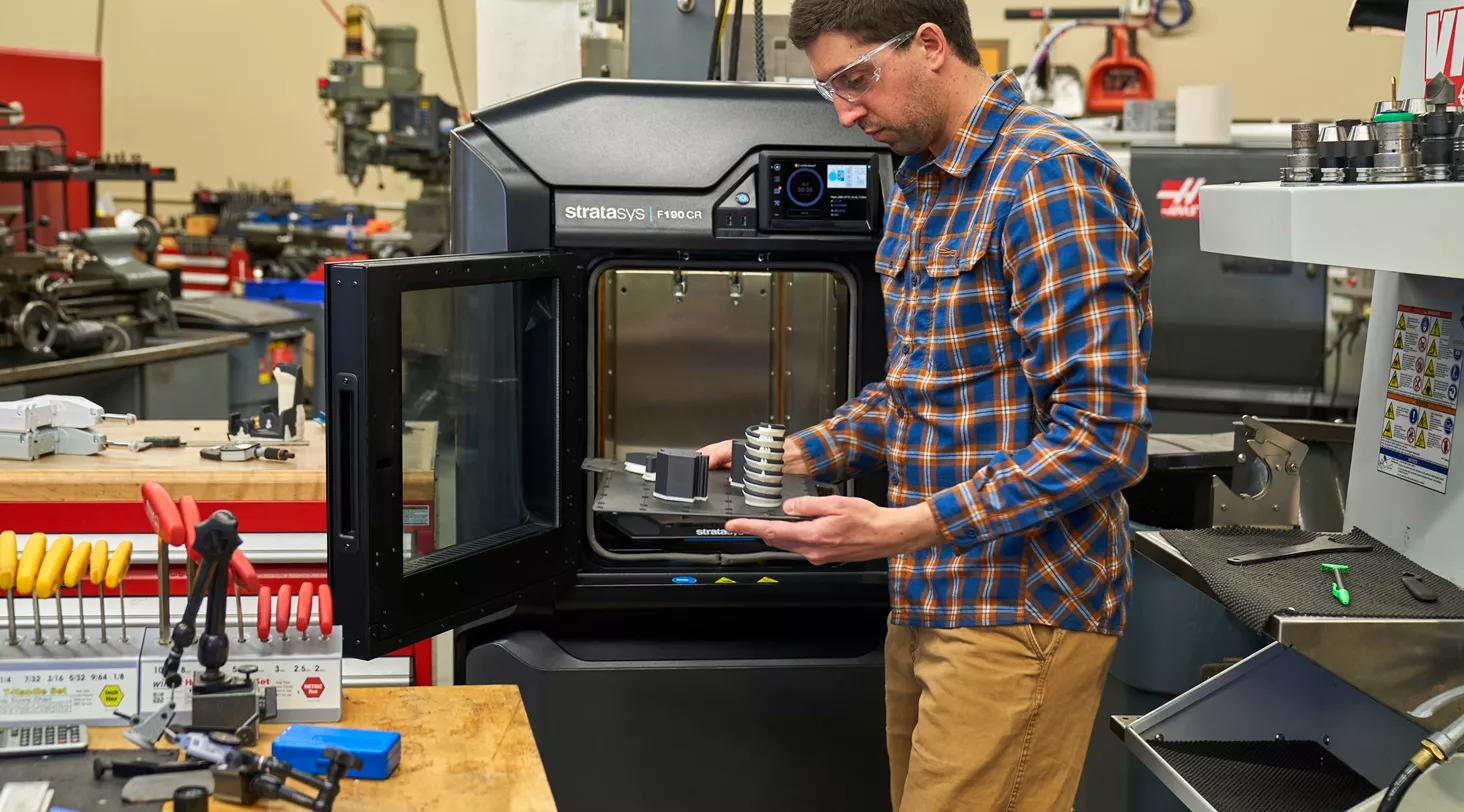
Is your engineering lab truly preparing students for modern factory floors? At GoEngineer, we specialize in helping educational institutions transition to industrial-grade additive manufacturing ecosystems. From grant procurement assistance to industry-aligned curriculum integration, we are your partners in workforce readiness and student placement success.
Related Articles
5 High-Tech Highlights from RAPID 2026
Antero 840CN03 Deep Dive: Strengths, Applications, Limitations & More
From Hobby to Heavy Duty: Why High-Performance Polymers Matter Now
How 3D Printing is Helping Manufacturers Fight Back Against Tariffs

About GoEngineer
GoEngineer delivers software, technology, and expertise that enable companies to unlock design innovation and deliver better products faster. With more than 40 years of experience and tens of thousands of customers in high tech, medical, machine design, energy and other industries, GoEngineer provides best-in-class design solutions from SOLIDWORKS CAD, Stratasys 3D printing, Creaform & Artec 3D scanning, CAMWorks, PLM, and more
Get our wide array of technical resources delivered right to your inbox.
Unsubscribe at any time.